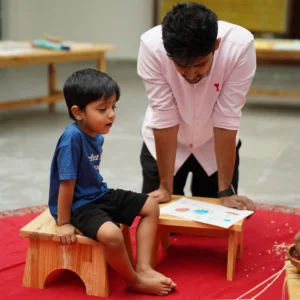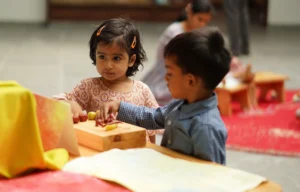

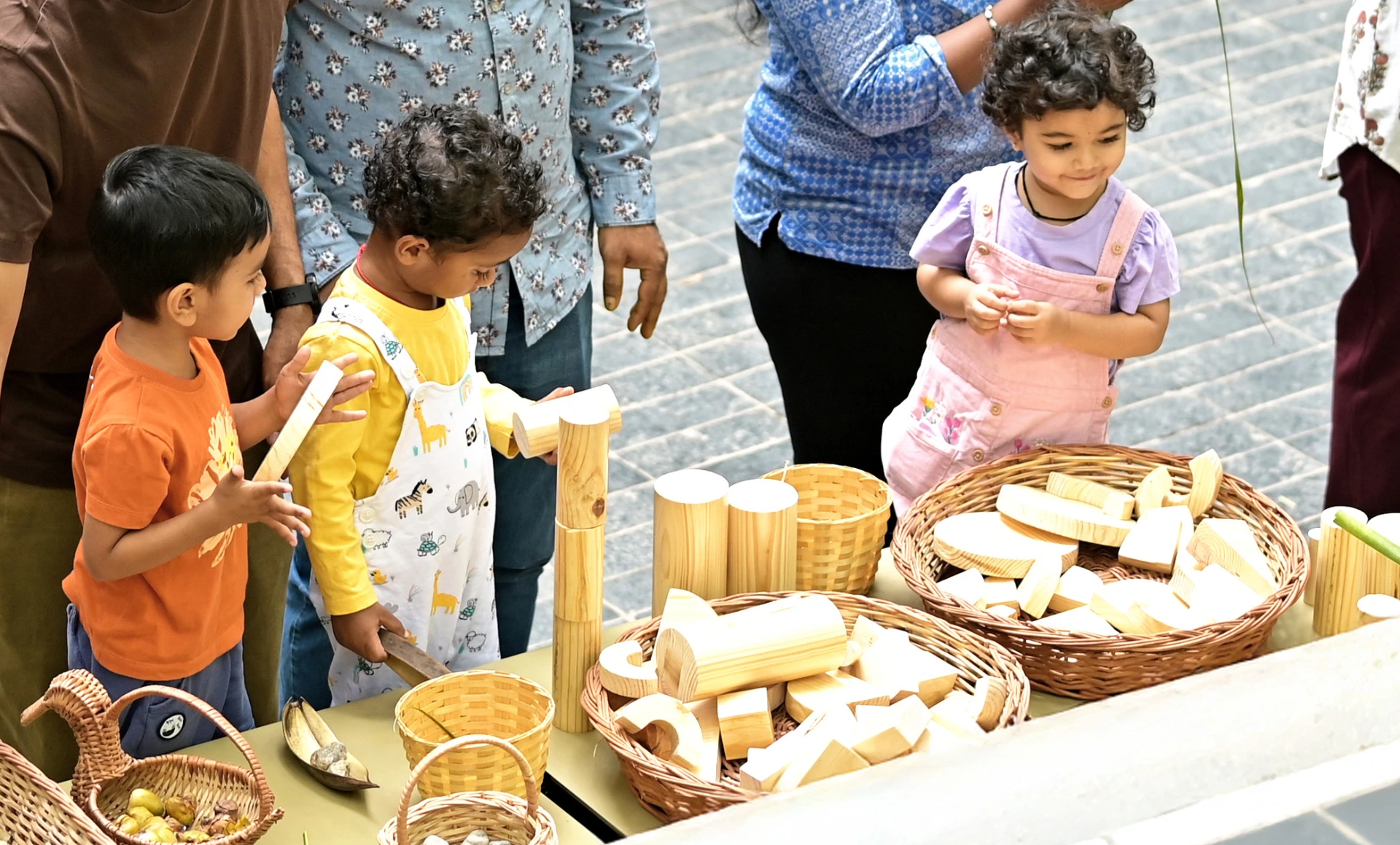
When you step into a Waldorf classroom, you notice a few things that stand out. There is no blackboard. No textbooks that are open. No backpacks full of books. No screens. No rush.
No competition.
Instead, children are fully present, working with their hands, listening with wonder, learning at their own rhythm. They are cheerfully painting, building or listening to a story.
You wonder about the difference and ask yourself if this is really a school?
Welcome to a typical day at a Waldorf school.
Not your usual school system
Here, learning isn’t about doing better than a classmate, cramming before the exams, scoring high marks, topping the class, showing off report cards, and taking home trophies.
The Waldorf philosophy is refreshingly different, offering an unhurried approach to learning, a stress-free environment where children can blossom and a place that nurtures strong bonds between children and their teachers.
Waldorf education system enables children to grow up to be free-thinking, well-rounded individuals who are empathetic, responsible and socially aware. To understand how such an approach prepares children to thrive in a changing world, while being content and contributing meaningfully to humankind, we need to know more about Waldorf education.
Where does it come from? How does it work? What makes it different? How does it benefit children?
If you are a parent with a child at the threshold of their academic journey or someone who is curious to know about alternative educational approaches, read on to know about the Waldorf education system and philosophy.
The roots of Waldorf
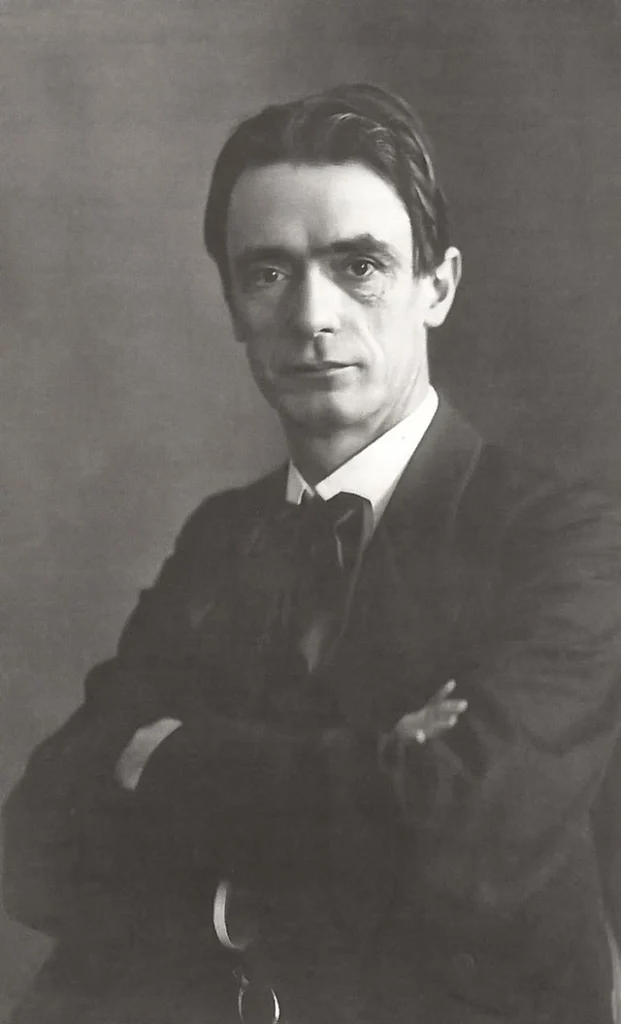
Almost a century ago in 1919, Austrian philosopher Rudolf Steiner designed the Waldorf curriculum with its core foundations in humanistic education. The curriculum focussed on not just academic learning but the overall development of the whole human being.
Steiner emphasised that education should keep pace with a child’s natural development at all levels – physical, emotional, mental, social and spiritual – and not just focus on academics.
This refreshing and meaningful perspective resonated with several academic institutions and educationists who believed that the “whole-child” approach was much needed. Since then to this day, the Waldorf approach has caught on and resulted in over 1,000 Waldorf schools and 2,000 early childhood centres in more than 60 countries.
Learning that flows with the child
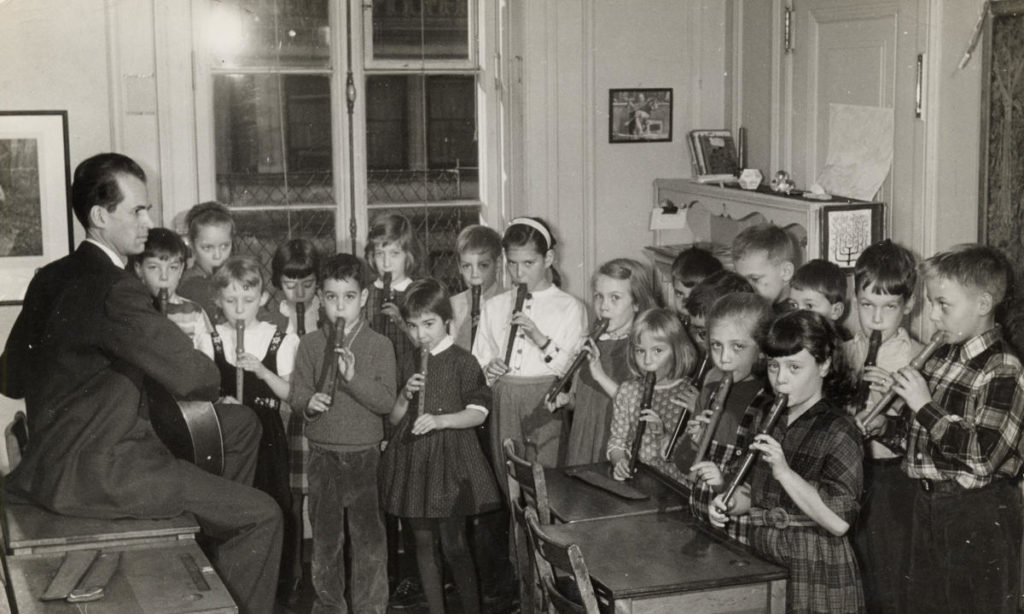
The century-old Waldorf education philosophy is rooted in the belief that learning should be joyful, creative, and age specific. With this as the cornerstone and driven by the intent to preserve the sanctity of childhood, a Waldorf school ensures that learning keeps pace with a child’s growth and development. So, the curriculum unfolds to match what the child can feel, grasp, imagine, and create at each stage. That’s why learning is meaningful, unhurried and joyful in Waldorf schools, with children being at ease with the pace and structure.
Waldorf education believes that pushing academics too early does not make children smarter, instead it makes them anxious.
There are several reasons why the Waldorf education system has been thriving for over a century. Here’s a brief glimpse of some of them.
Core values of the Waldorf philosophy
The Waldorf education approach is rooted in the idea that children learn best when all aspects of their being are engaged:
- Thinking (head)
- Feeling (heart)
- Willing (hands)
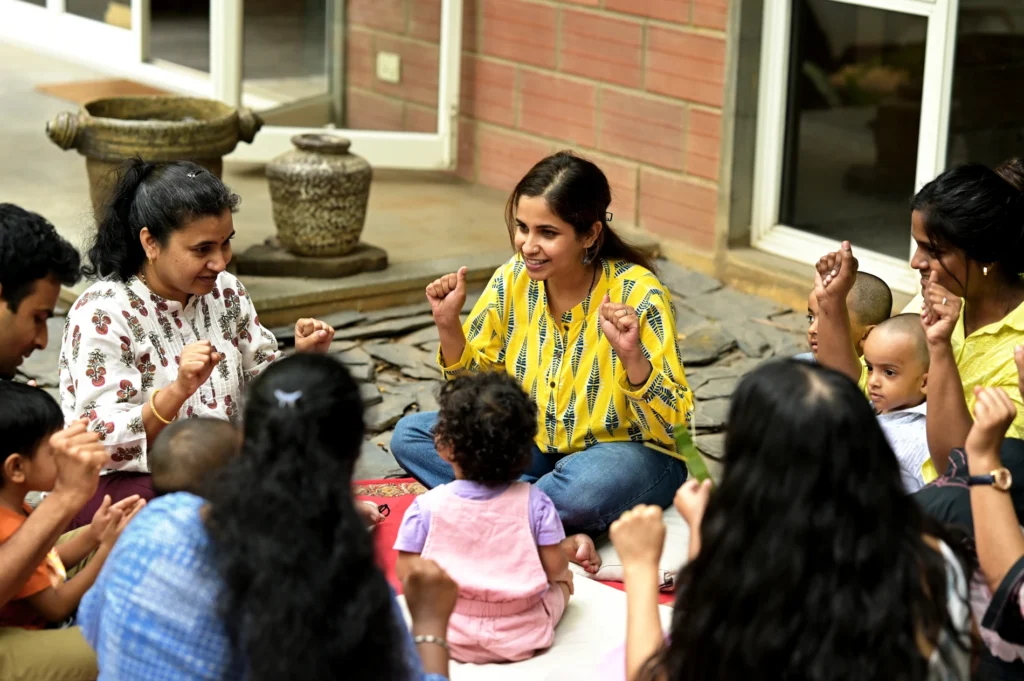
What this means is academics is blended with the arts, hands-on work, and social-emotional learning. So, a math lesson might be taught through rhythmic movement, jumping games, or bead patterns. History might be explored through storytelling and song. Science might be discovered through nature walks and from observation. The list goes on. At the centre of it all, is the child who learns by doing, experiencing and feeling.
The power of art and imagination
In a Waldorf school, art is not an “extra” subject. Instead, it’s central to the meaningful learning process. Whether it’s drawing, music, drama, or crafts, creativity is seen as a pathway to learn and experience, and not just as an expression. Every subject is taught in ways that engage the imagination.
Focus on one subject
In the Waldorf education system, students don’t jump from subject to subject each day. Instead, they focus on one topic intensively for several weeks. So, children deep dive into main lesson blocks in subjects like science, geometry, or history. As a result, their understanding of a lesson is deeper and long lasting.
Strong teacher-student bonds

In most Waldorf schools, the same teacher stays with a class for up to eight years. This long-term relationship helps build trust, stability, and provides a deep understanding of a child’s needs and growth. Equipped with the awareness of a child’s strengths, challenges, and unique potential, teachers step in to provide valuable guidance and nurture individuality.
Rhythm and routine
Waldorf education places a strong emphasis on rhythm and ritual with the learning environment enabling children to evolve slowly, fully, and at their own rhythm. The class routines give children a sense of security and belonging.
Experiential learning
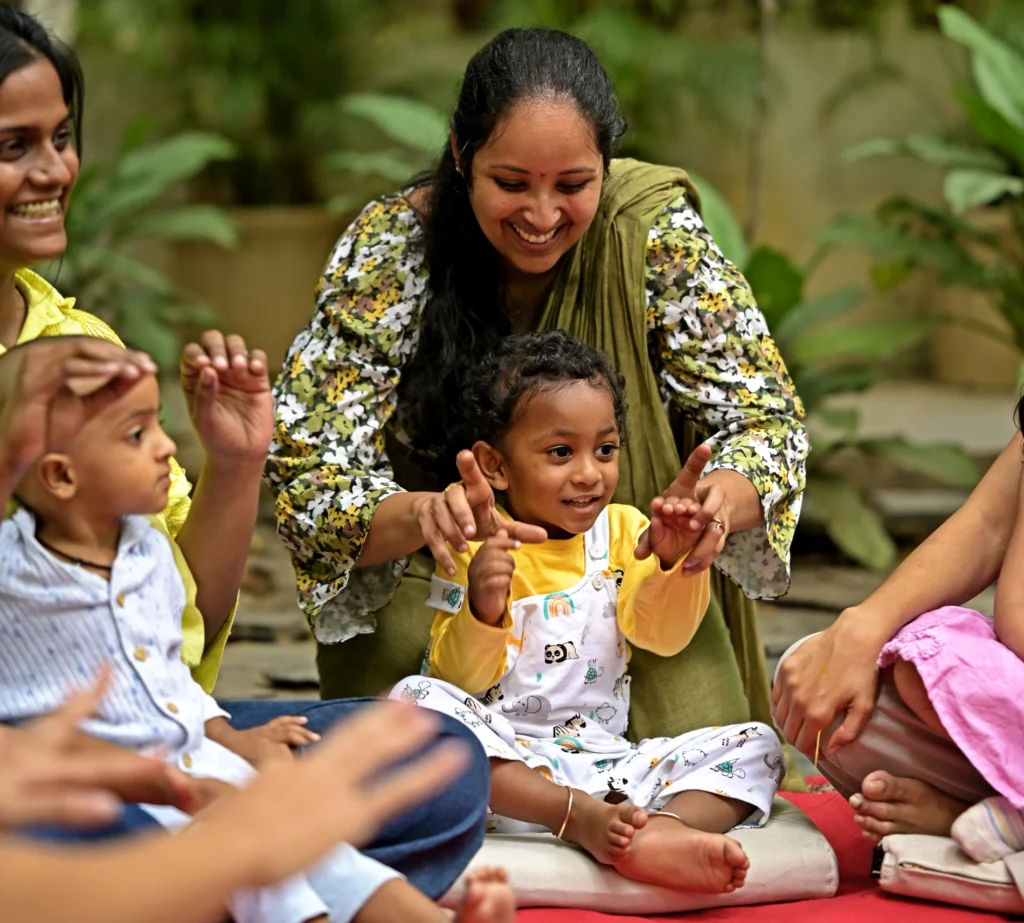
An interesting point for parents to note is that Waldorf classrooms rely very little on technology especially in the early years. Digital learning is introduced only when children are ready – not just cognitively, but emotionally and physically too. Instead of screens, children engage in real-world experiences by building, baking, painting, singing, playing, storytelling, and exploring nature.
Why choose the Waldorf education system?
Parents and families who choose the Waldorf system of education for their child tend to value creativity, emotional intelligence, and slower, more meaningful learning. If you are looking for an educational approach that prioritises joy over pressure, depth over rush, experiential learning over rote, and the warmth of human connection over disconnected learning, Waldorf education is certainly worth exploring.