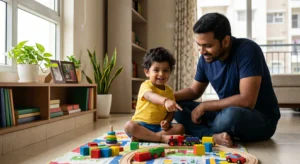

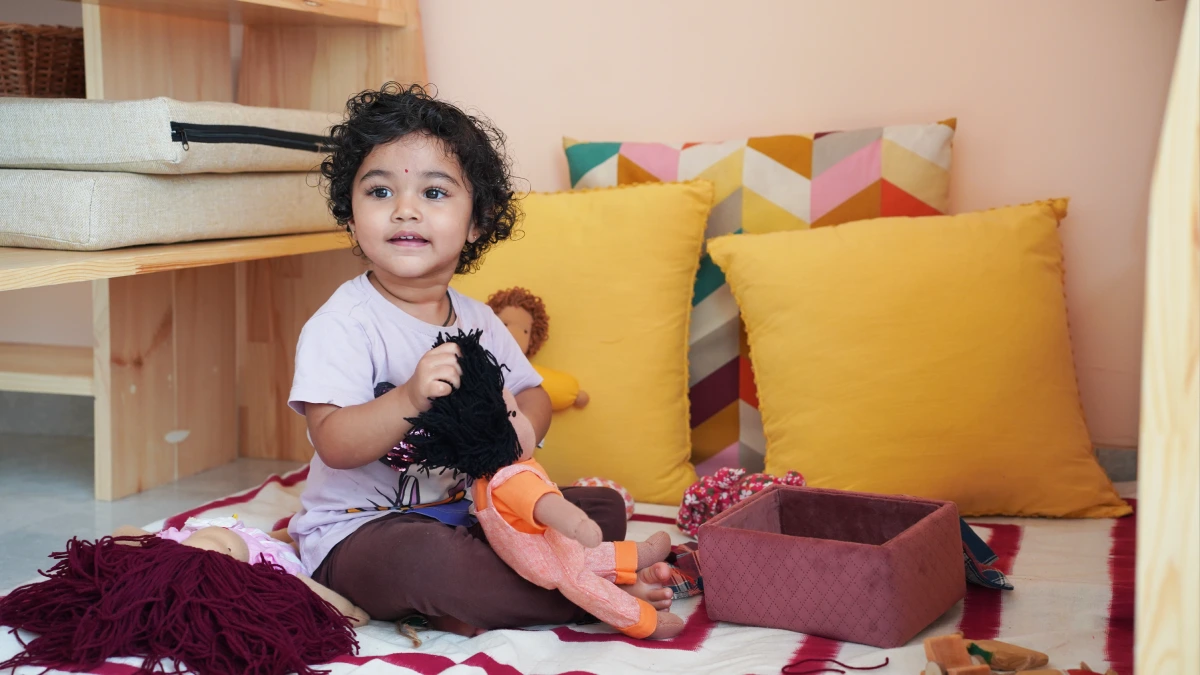
An age-old question that parents, educators, or even researchers and scientists ask is: What is the right age to begin formal education?
Whether it is the Gurukul system of education – India’s ancient method of studying, or the century-old Waldorf philosophy, both of these practices have established that formal instruction and rigorous studies should begin only after the age of six.
These approaches stem from a grounded belief that formal education after 6 years is appropriate, as it allows for a healthy, unhurried early childhood. The Waldorf approach to delayed academics stems from the understanding that the formal academic learning of literacy and numeracy is abstract and removed from life itself for a child before the age of 6.

Closer home, the National Education Policy (NEP) 2020 age criteria mandates a minimum age of six years for admission into class 1. This aligns with global standards for child readiness and, importantly, does not place academic pressure on young children.
Let us understand what happens during those initial 6 years and the significance it has on the learning that lies ahead in the life of the student.
Watching, absorbing and becoming
Early childhood is a time when children grow into their bodies and settle into the world around them. At this juncture, they absorb everything that happens in and around them – from the ground beneath to the sky above, from the way people move to the way they talk, from the sights they see to the sounds they hear. Everything – simply everything – be it big or small, becomes a part of their inner world.
You might have noticed infants sometimes staring into the faces of adults or looking intensely at their own hands and feet. Or seen toddlers who are wonder-struck at how fast or far they can run or how high they can throw a ball. What these little ones are doing is taking in things around them while also trying to understand their own bodies and capacities.
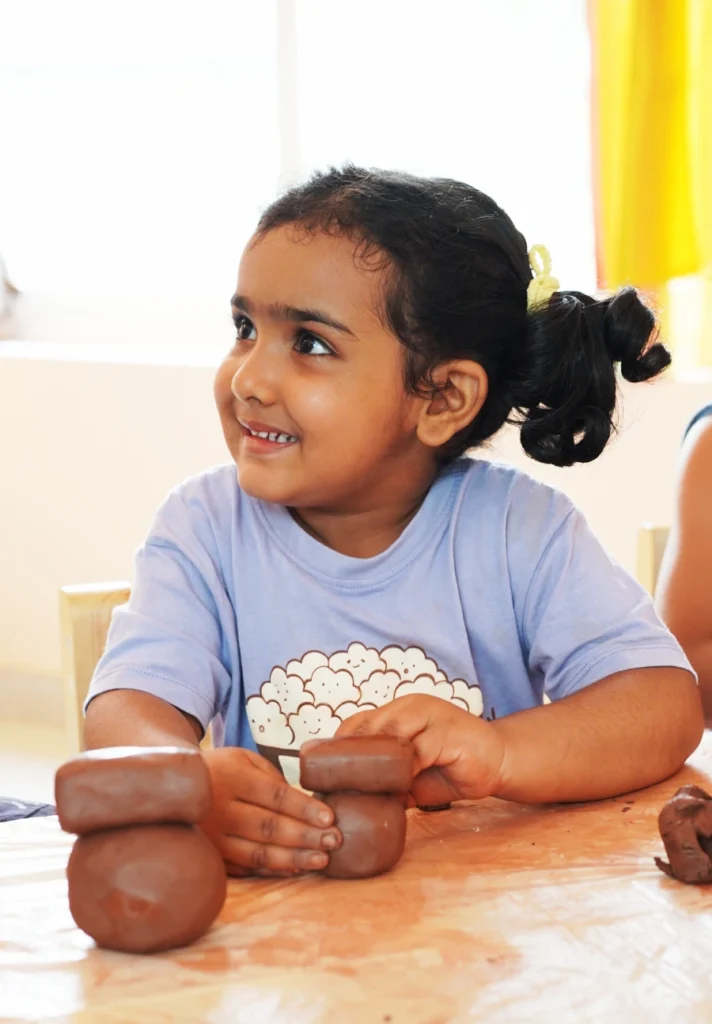
Learning through imitation
At this early childhood education age, children explore their world through imitation and imagination, which is reflected in their stories and pretend play. When you see a child using a phone or beginning to speak in a certain accent after watching a show, it reveals what they are exposed to. This basic form of imitation comes from observing and experiencing and shows up in speech and movement.
However, this imitation often gets misunderstood as intelligence and readiness for more complex learning. It consequently leads to academic pressure on young children and burdens the child with structured learning that they are not ready for. It takes out the joy and meaning from learning and becomes disconnected from reality. These are the screen-free, early years, before formal education age, and need to be cherished mindfully.
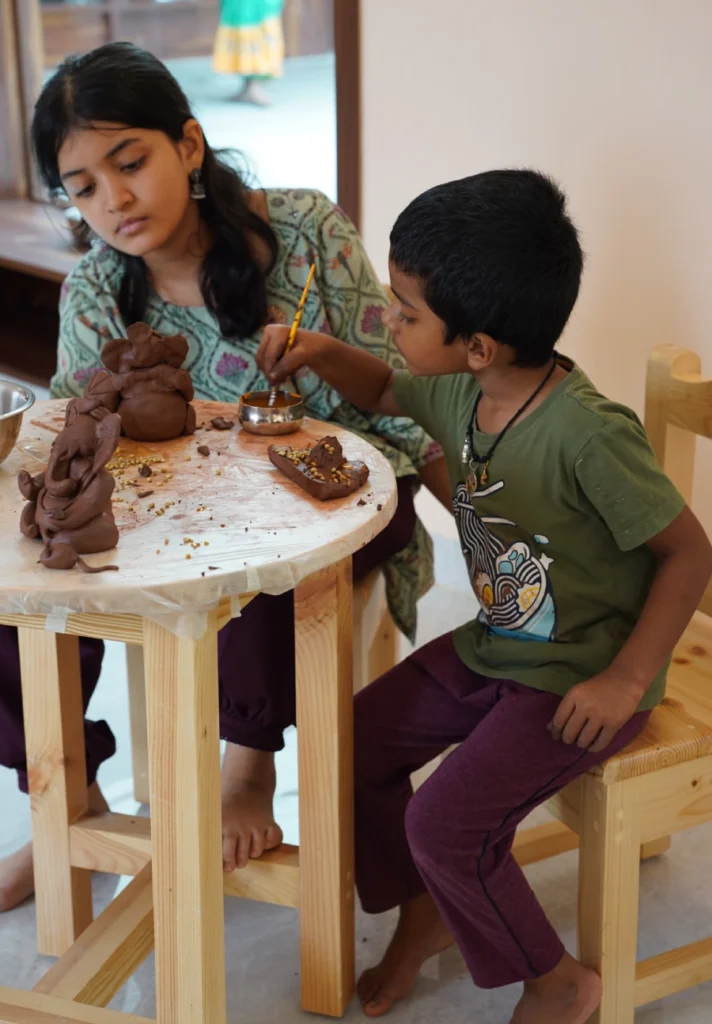
Learning through songs, stories and more
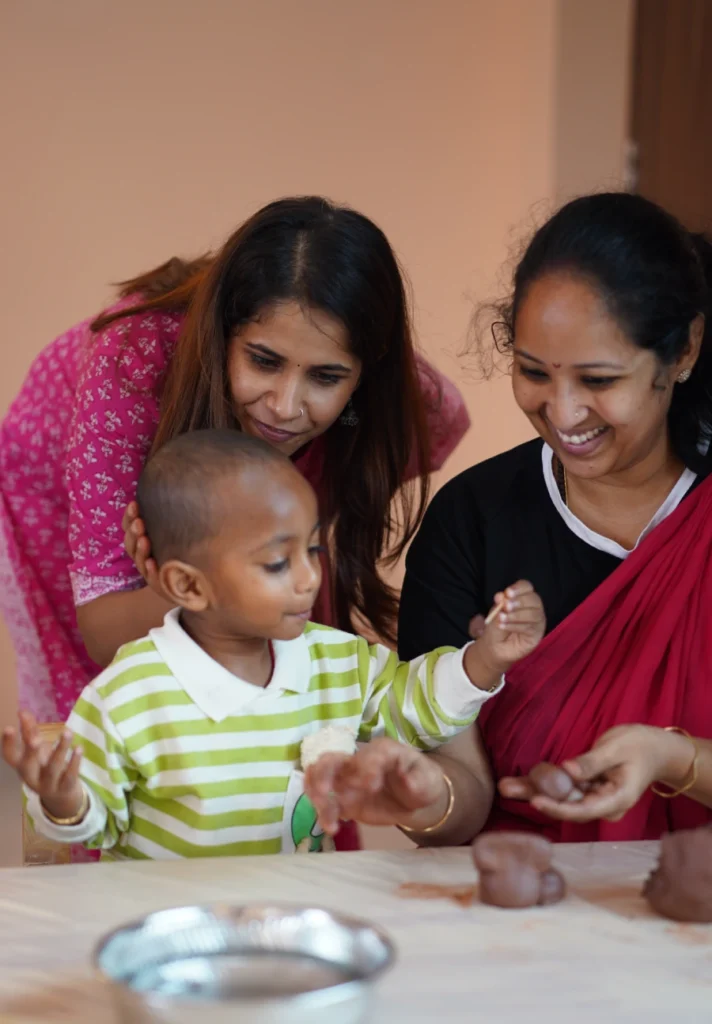
When a child talks to us in baby language or gibberish, we respond to them with clear and proper language. They pick up on the vocabulary and grammar not through instruction or correction but through sheer imitation. Songs, stories, and conversations during play and work all form pathways through which children learn speech and develop. Reading and writing in pictures through painting, drawing and creating art, paves the way for learning that is not restricted by form or structure. This kind of learning is real for children and is not abstract or isolated from real life, and is, in fact, purposeful.
Helping children transition into the outer world
What children need in the early childhood education age is bodily balance, speech, movement, and touch. Our task as educators is not to awaken them with abrupt instructions at this age, but to gently transition them from their own bodies to the outer world. It is also our responsibility to guide them in the higher grades and help them find their place in the world.
The right age for formal education
So, to answer the question around when children should start studying? Or at what age should a child start formal education, or the best age to start academic learning? The answer is six.
You will notice that as a child turns six, they begin to seek structure, have prolonged periods of focus, desire complex work and tasks, and have enough stamina for the day. They also want to know more about the rules and ways of life. In contrast, a toddler below 6 years looks for safety and predictability. This points to the importance of waiting till 6 for formal schooling.
Thraya’s approach to formal education
Inspired by Waldorf philosophy, Thraya is one of the schools that respect childhood. There is no writing or reading pressure in kindergarten. Our intention is to introduce learning in a manner that keeps pace with the life stage of the child, at the right time, in the right way. We recognise that formal education after 6 years is when the child is ready to receive it, and plan to keep it that way. And by nurturing natural curiosity, not grades, our aim is to offer learning that forms deeper connections and greater understanding.