

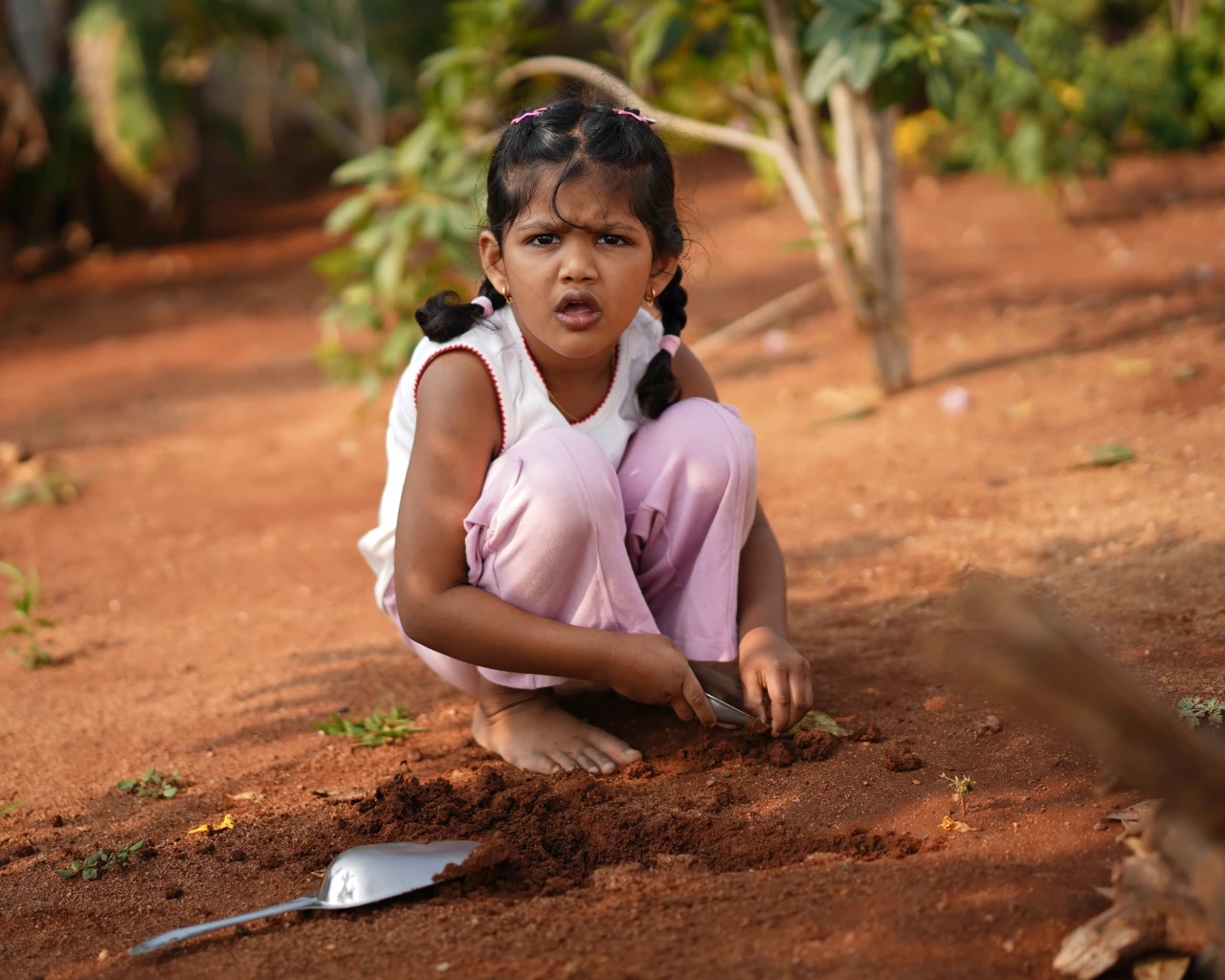
In a Waldorf Kindergarten, free play is not seen as a break from learning but as the very foundation of it. When children are given time, space, and simple materials, they naturally explore, imagine, build, negotiate, and discover. In these quiet, self-directed moments, they begin to develop the confidence, resilience, and inner strength that later life will ask of them.
What Is Free Play in Early Childhood
Free play is play that is self-chosen, self-directed, and driven by the child’s own interest. It does not begin with an adult’s instruction or end with a prescribed outcome. The child decides what to build, whom to play with, how long to continue, and when to change direction. The joy lies in the doing, not in producing something measurable.
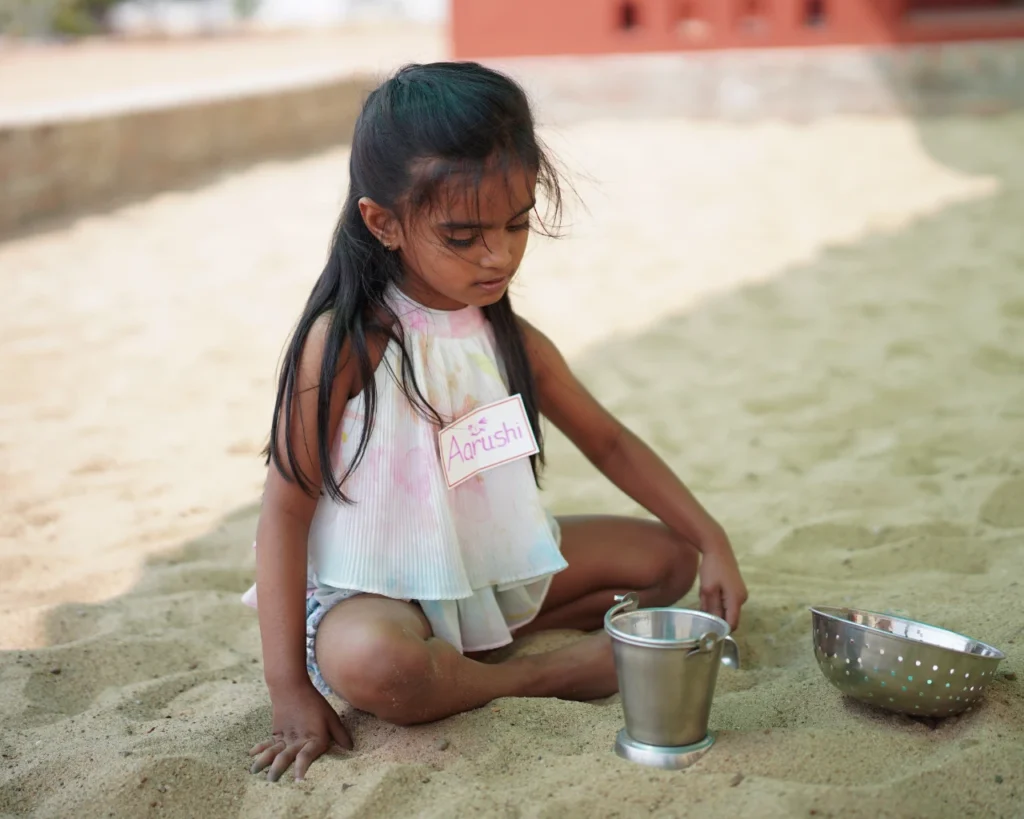
In true free play, the process matters more than the result. A block tower may rise and fall many times. A story may begin and change shape repeatedly. What looks repetitive to an adult is, for the child, deep inner work. When we do not interrupt or overly direct this play, the child becomes fully absorbed in the experience. This wholehearted engagement builds focus, initiative, and the ability to devote themselves later in life to meaningful tasks.
Why Free Play Is Essential in Kindergarten
Before children can sit with abstract ideas, they must first move, imagine, experiment, and experience the world through their whole being. This is what makes play in the kindergarten years the real learning that a growing child needs.
Free play develops the will and builds capacities that no worksheet can teach.
When children create their own games, solve small conflicts, or decide how to use a material, they are practicing responsibility and problem-solving. When a tower collapses and they rebuild it, resilience is quietly forming in them. When they negotiate roles in a pretend game, social understanding deepens.
A child absorbed in building a structure, preparing an imaginary meal, or arranging a small world of stones and leaves is strengthening their ability to focus and persist. These are the qualities that later support academic learning and reveal remarkable initiative, creativity, and inner direction in children.
What Children Learn Through Play
In its truest form, play exists for the joy of doing. When children play freely, they are not trying to achieve something measurable. They are exploring what it feels like to build, to imagine, to relate, to try, to stop, and to begin again. The value of play lies in the process itself. It does not need to produce a product, a skill, or a visible outcome.
In free play, children learn to be human. They discover their preferences, test their limits, express emotions, and experiment with roles.
A child stirring sand into an imaginary soup or arranging stones in a line is not “wasting time.” They are exploring rhythm, relationship, and meaning in their own way.
It is important to protect this kind of play where every moment is not rushed to turn it into a lesson or interrupt it with constant instruction. When the child is trusted and given time and space, something far deeper than skill-building unfolds. They develop an inner sense of agency, imagination, and presence — qualities that cannot be taught directly, but must be lived into.
The Role of Environment: Nature, Space, and Simple Materials
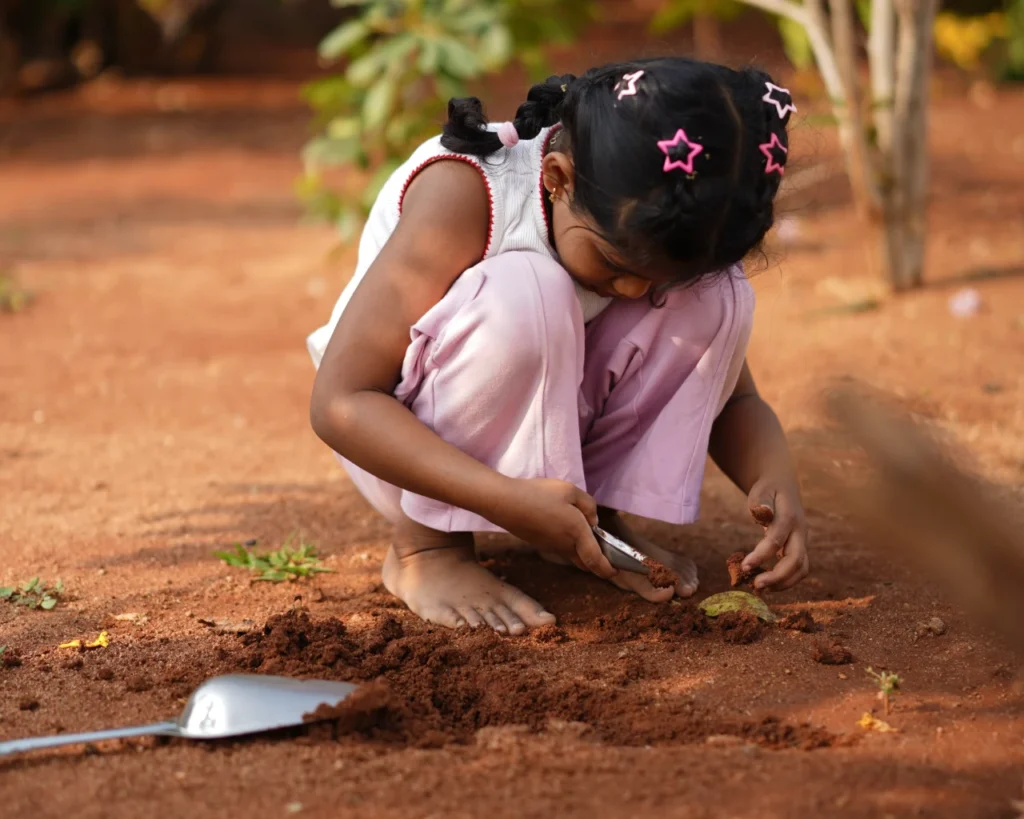
An environment that offers space, time, and simple materials sends a quiet message to the child: you are capable. You can imagine. You can create. Free play is deeply shaped by the environment that surrounds the child. Nature, open space, and simple materials create the conditions in which play can remain organic, imaginative, and self-directed.
When children play outdoors, the world itself becomes a living playground. A stick can turn into a wand, a fishing rod, or a bridge. A patch of mud becomes a kitchen. Stones become treasure.
Nature does not dictate how it must be used; it invites discovery. The uneven ground strengthens balance, the changing weather builds resilience, and the open sky gives space for movement and breath. Outdoor free play supports physical coordination, sensory integration, and a deep connection to the natural world.
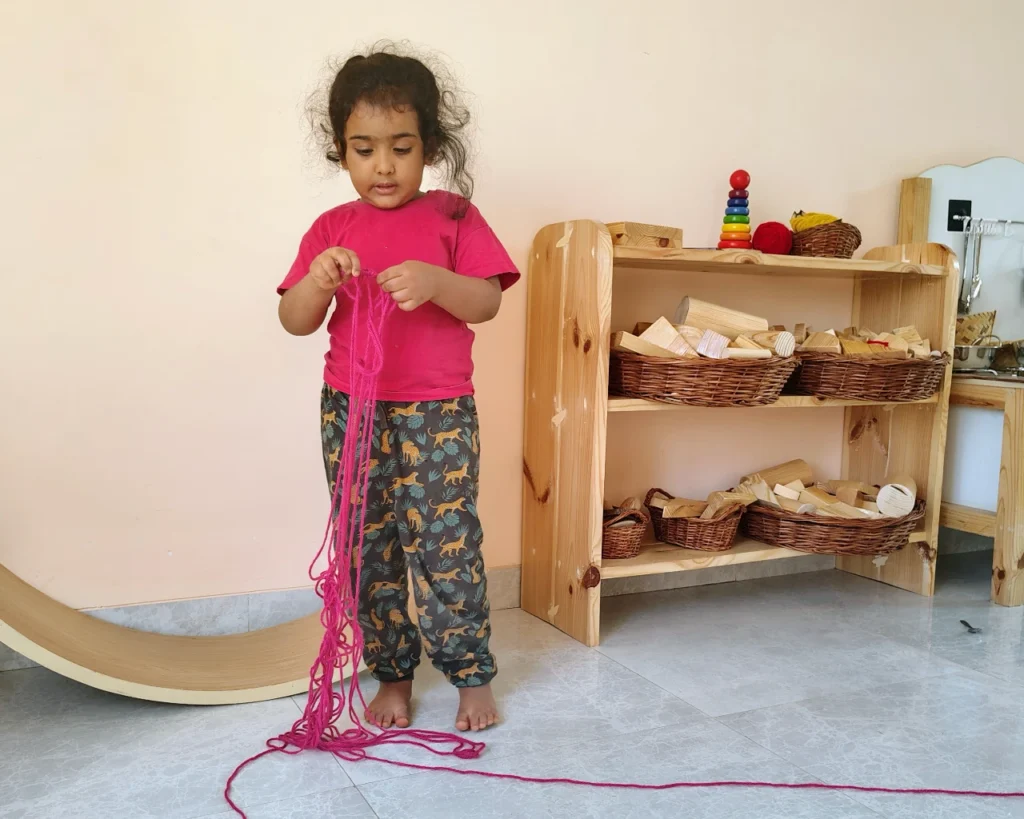
Indoor environments matter just as much. When spaces are uncluttered and thoughtfully arranged, children can focus more deeply. Too many toys or overstimulating materials often lead to restless, scattered play. Simple, unfinished toys — wooden blocks, cloths, baskets, wool, clay — leave room for imagination. The less a toy does on its own, the more the child must bring to it.
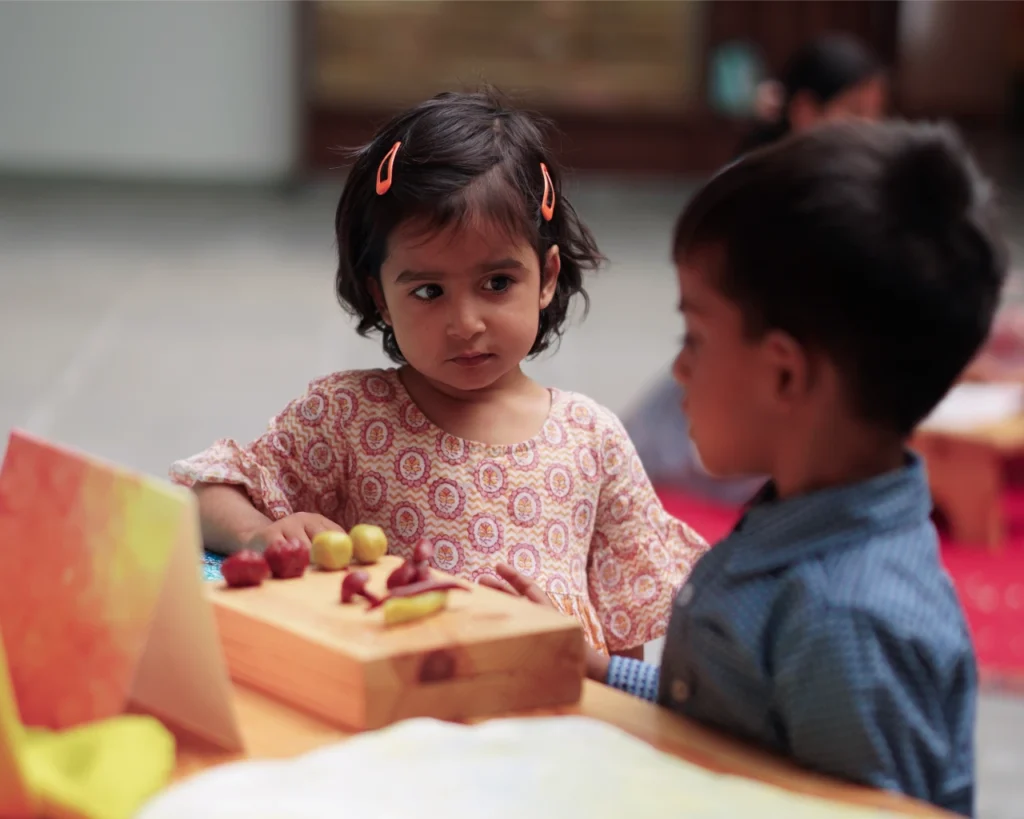
The Adult’s Role: Holding Space Without Interrupting Play
In free play, the adult’s role is to hold the space with quiet attentiveness and trust. It is not to direct the story, solve every problem, or suggest what should happen next. Instead, when children are allowed to play without constant instruction, they begin to rely on their own ideas.
When adults step in too quickly, something delicate is interrupted. A suggestion can replace a child’s original idea. A ready-made solution can take away the opportunity to struggle, think, and discover. Even well-meaning praise or direction can shift the focus from the joy of doing to pleasing the adult. Over time, frequent interruption can make children look outward for approval rather than inward for imagination.
This is why in Waldorf early childhood settings, teachers often prepare the environment carefully and then allow play to unfold. They watch for cues, support gently when required, and trust the process. In doing so, they protect the integrity of play — giving children the freedom to discover not only what they can build, but who they are becoming.