
“You will not be good teachers if you focus only on what you do and not upon who you are.”
— Rudolf Steiner
At Thraya, teaching is seen as a shared journey where the teacher and the child grow together. The heart of this journey begins in the teacher’s inner life, because who the adult is inwardly has a profound effect on the child. When a teacher works to cultivate calmness, clarity, and presence within themselves, it becomes the ground from which all teaching arises. Each day in the classroom then becomes more than managing lessons — it becomes creating an atmosphere in which children feel held, warm, and ready to learn.
A teacher’s inner balance quietly shapes the mood of the whole space: when the adult is centred, children sense it immediately. They feel safe, seen, and able to open themselves to the world. In this way, the inner work of teachers is not separate from teaching; it is the invisible foundation that allows every child’s experience to unfold with trust and ease.
What Inner Work Means
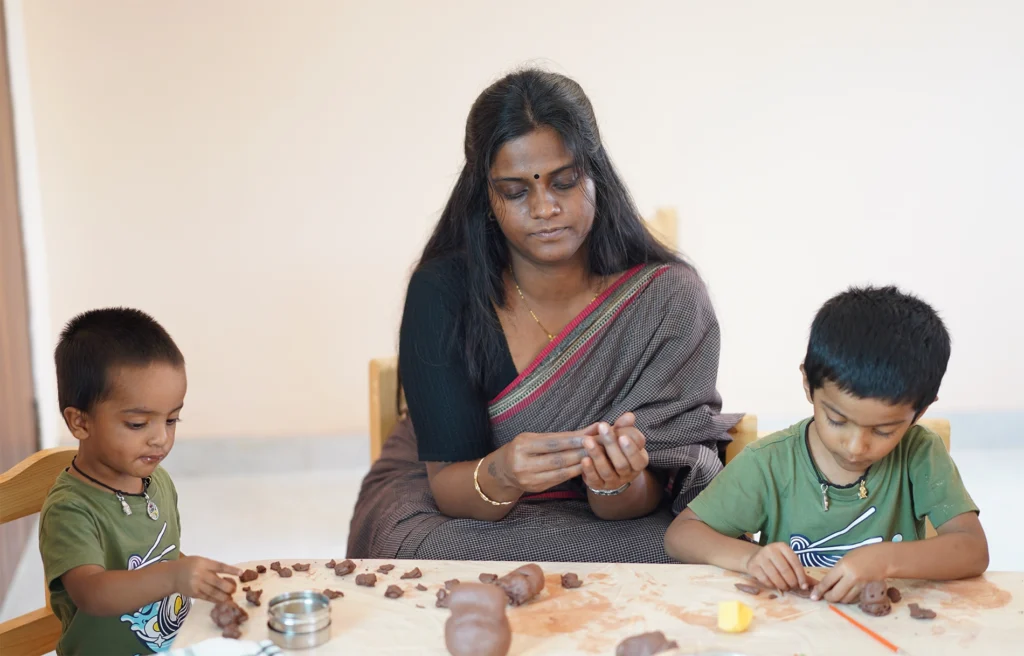
Inner work is the quiet, continual practice of becoming more aware of our thoughts, feelings, and intentions. It invites the teacher to pause, to listen deeply, and to meet each moment with presence rather than reaction. In this way, inner work is not something separate from teaching but it is the foundation that steadies the teacher from within.
A teacher who tends to their inner life learns to see the child with clearer eyes. They respond with patience instead of haste, curiosity instead of judgment.
This creates a classroom mood where children feel genuinely understood and gently guided. At Thraya, we hold this understanding that who we are as teachers profoundly shapes how children experience learning and feel in our presence.
Practices That Nurture the Inner Life
To nurture this inner steadiness, Thraya teachers engage in simple yet meaningful practices woven into the daily rhythm. These practices help us stay centred, creative, and deeply connected to the children we teach. Each one offers a quiet pause in the day, a moment to breathe, to reflect, and to realign ourselves with the qualities we hope to bring into the classroom.
Morning verses and quiet reflection
Our day at Thraya begins in stillness allowing the teacher to gather their thoughts and set a gentle intention for the hours ahead. This is as simple as lighting a candle, reading a short verse, or taking a few quiet breaths before stepping into the classroom. The calmness cultivated in these moments carries into the classroom influencing how the teacher holds and guides the children through lessons, transitions, and play.
Reflective conversations and weekly meetings
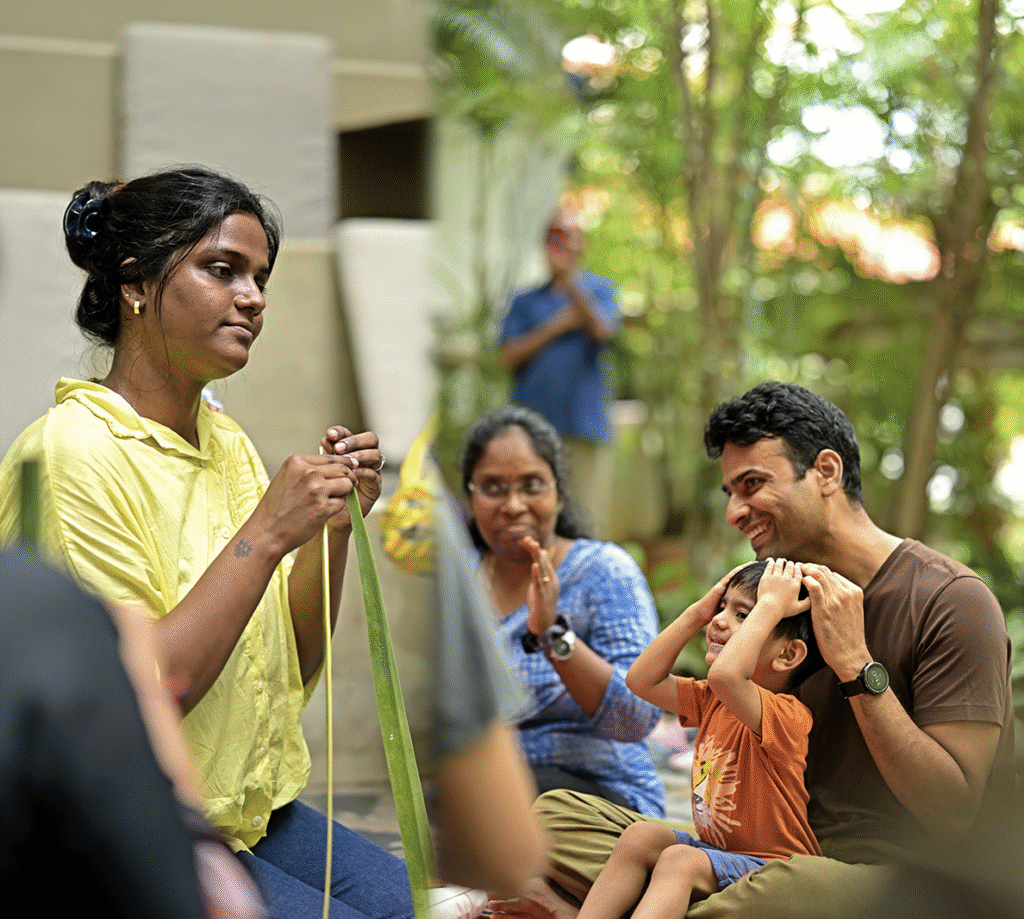
At Thraya, teachers gather together once a week to share experiences, seek guidance, and learn from one another. These conversations offer us a space to share observations, revisit challenges, and hold questions about the children with openness rather than judgement. Sometimes this means speaking about a moment that unfolded in the classroom; at other times, it is simply sitting together in quiet reflection. Through this collective reflection we strengthen our capacity to see not just the behaviour of a child, but the story beneath it, leading to deeper understanding and compassion.
Pedagogical study and reading
Regular study is an essential part of a teacher’s inner life at Thraya. By engaging with pedagogical texts and child-development insights, teachers renew their understanding of how children grow, think, and feel at each stage. A passage read in the morning or a chapter explored together as a faculty often becomes a quiet guide in the classroom. Through this steady deepening of knowledge, teachers learn to teach with intention, sensitivity, and a living understanding of the child before them.
Art, music, and handwork
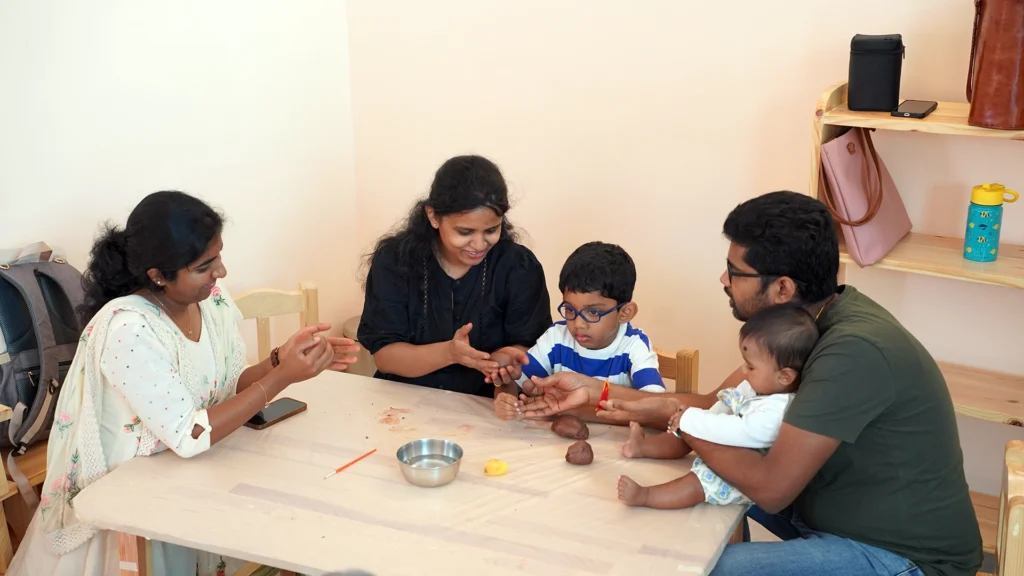
At Thraya, teachers paint, sing, play an instrument, and work with their hands, as a way of rekindling their sense of calm, rhythm, and joy. These moments of creativity are not separate from teaching but they slowly reshape how lessons are brought to the children. A teacher who spends time blending colours on a page, or stitching a small piece of handwork, naturally carries that same attentiveness into storytelling, mathematics, language, or any part of the day. Through this artistic approach, teachers transform subject lessons into living, beautiful experiences.
Time in Nature
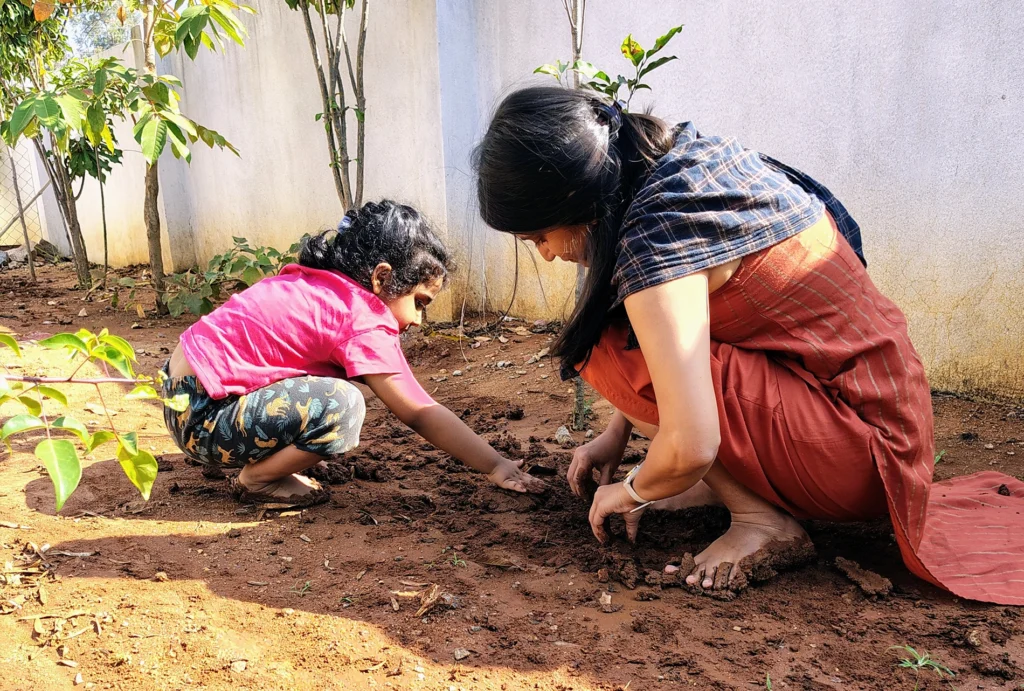
By connecting with the natural world at Thraya, teachers not only replenish themselves but also model curiosity, reverence, and awareness, helping children develop a similar connection to the world around them. In observing the subtle changes in light, the growth of plants, or the movement of clouds they build patience, presence, and attentiveness — qualities essential to teaching. The time spent in nature allows teachers to slow down, restore a sense of calm, and attune themselves to life’s rhythms. This inner steadiness translates directly into the classroom as a teacher who has practiced quiet observation brings the same focus and sensitivity to guiding children, telling stories, or responding to their needs.
Living the Inner Work
At Thraya, teaching is not just about lessons or subjects; it is about living alongside the child with presence, care, and awareness. Through their own inner work, teachers cultivate the qualities of calm, attention, and empathy that allow children to thrive. In this shared journey, both teacher and child grow together, discovering the wonder of learning, the beauty of connection, and the depth of human experience.