

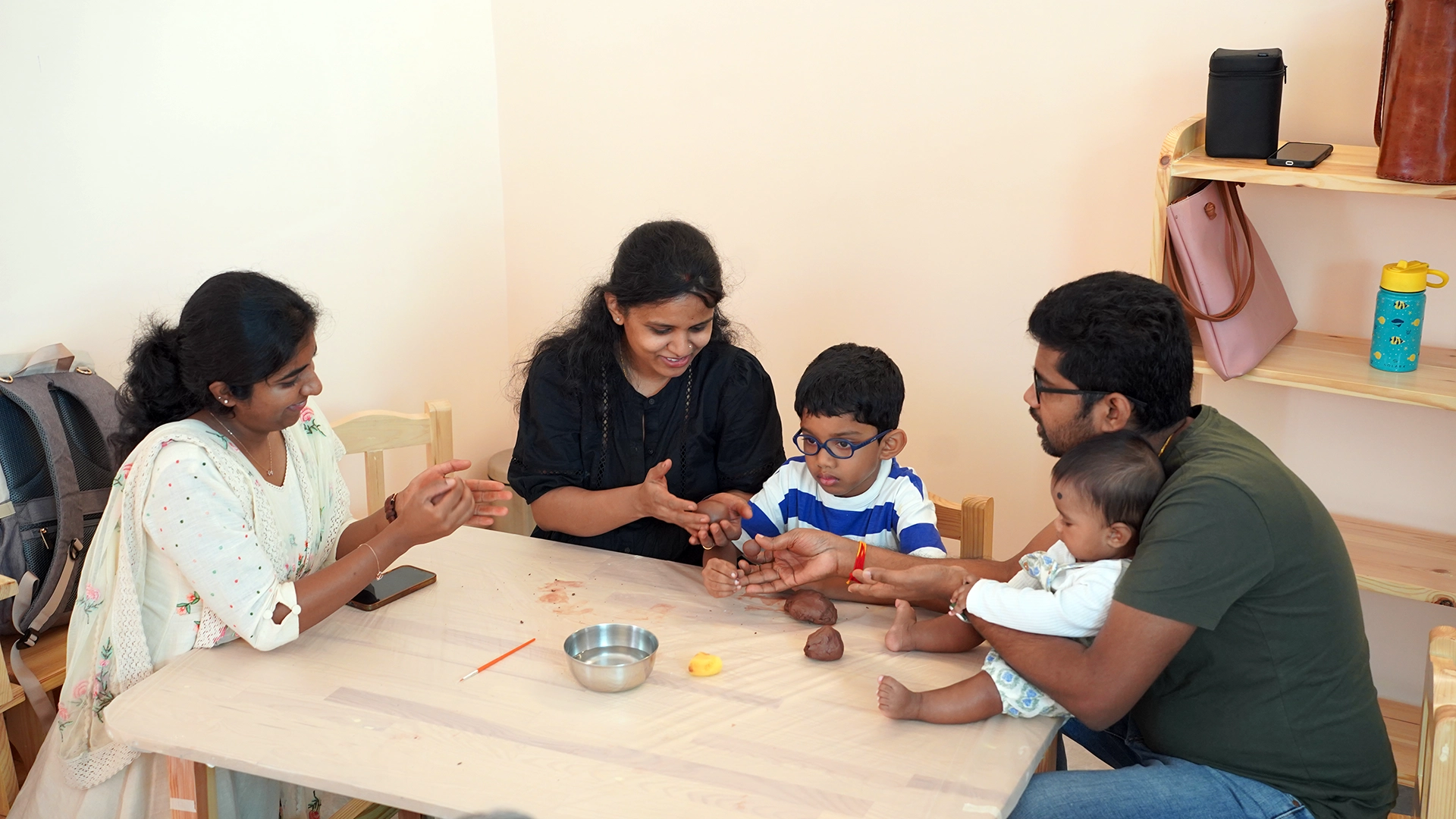
In most early childhood classrooms, children begin learning to read and write through worksheets, tracing, and phonics drills soon after they start school. However, in a Waldorf kindergarten, this process unfolds differently. Reading and writing are not taught through formal lessons, but nurtured naturally through play, movement, and imagination. Just as children learn to walk and talk in their own time, literacy too grows from within, supported by stories, songs, and the rich world of spoken language that surrounds them every day.
Building the Foundation Before Letters
In a Waldorf kindergarten, literacy begins long before a child meets a written letter. Every day is filled with songs, rhymes, movement games, storytelling, painting, and drawing which are experiences that prepare the ground for reading and writing in a natural way.
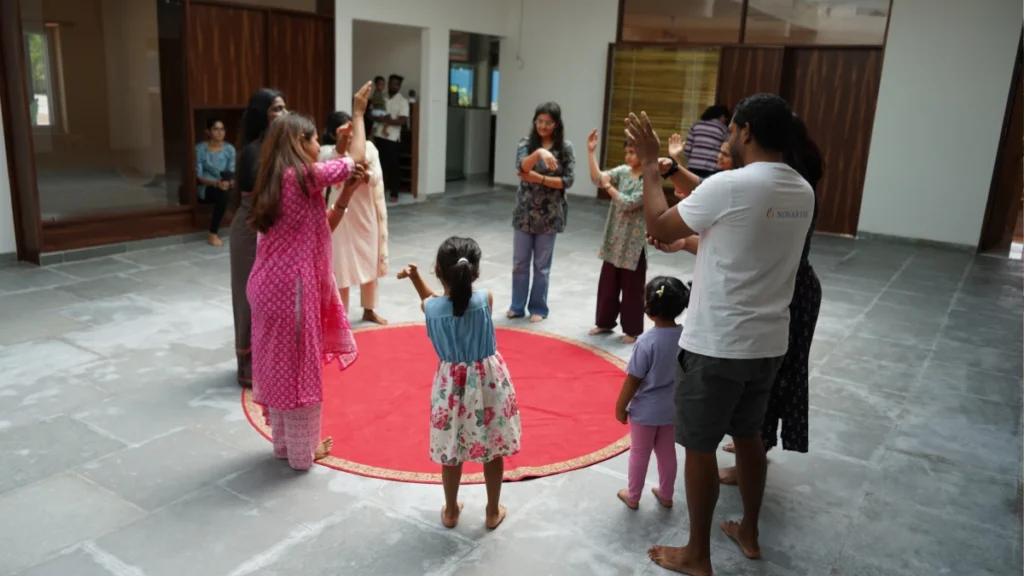
Through these daily rhythms of movement, song, and story, children strengthen their bodies and senses. They learn to listen carefully, move with control, and express themselves clearly. These are the same foundations that support reading and writing: a steady hand, an attentive ear, and a mind that can follow sequence.
Songs and rhymes strengthen memory and help children hear the musical patterns of speech, which later support phonetic awareness and fluent reading.
Movement games like clapping, skipping, or circle dances train focus and spatial awareness, preparing children to track words across a page and to orient letters in space. Drawing, finger plays, and handwork develop steady hands and careful observation which is the same fine control and attention to form needed to write letters with confidence and care.
All of this becomes the living soil in which literacy takes root. When letters finally appear, children meet them as something familiar. This way reading and writing grow out of experience, not abstraction.
From Oral Language to Written Word
The natural rhythm of learning is that listening and speaking come first, while reading and writing grow out of them. In Waldorf education, the same sequence is honoured. Children in the early years immerse themselves in rich oral language through songs, verses, and storytelling. They first experience language as living sound and rhythm. They listen, imitate, and speak long before they read or write, allowing language to become part of their whole being.
By the time they are ready to meet letters, usually in Grade 1, language already feels alive within them. Each letter is then introduced as a picture drawn from a story, like the “M” from a mountain, the “S” from the curve of a snake, the “B” from a butterfly’s wings. Children first draw and paint the image, then gradually see how the form of the letter grows out of it. This way, letters are not abstract symbols to memorize but forms filled with meaning, beauty, and life.
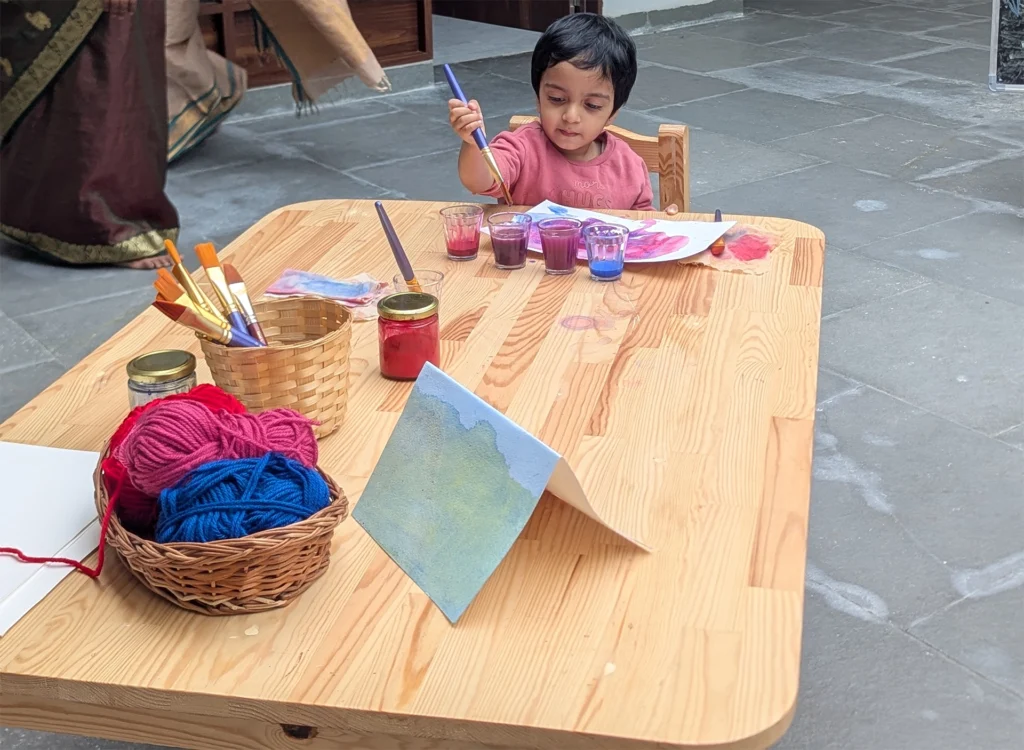
Here, the transition from spoken to written language happens smoothly and meaningfully. Writing grows out of drawing, reading follows writing, and both arise from a deep, living relationship with language rather than explanations. What begins as sound and image gradually becomes symbol and word in a journey that keeps the wonder of discovery alive at every step.
Learning Through the Arts and the Senses
In Waldorf education, art and play is not just decoration or pastime, it is literacy in its earliest, most organic form. They prepare the ground for building the skills and capacities that later become reading and writing.
When children draw flowing lines, circles, and curves, they are unconsciously rehearsing the movements their hands will one day make when forming letters.
The wide strokes of a paintbrush or the gentle shaping of beeswax strengthen the hand, wrist, and fingers while developing coordination and control which are all essential for confident, fluent handwriting.
At the same time, artistic work cultivates attention and perception. As children observe shapes, colours, and patterns in their drawings or in the natural world, they learn to notice fine details. Later, this same visual awareness helps them to recognize letter forms and distinguish words on a page. When a child paints a sunrise or moulds a bird from beeswax, they are translating inner pictures into form. It is this same creative movement that later allows them to bring thoughts into written words.
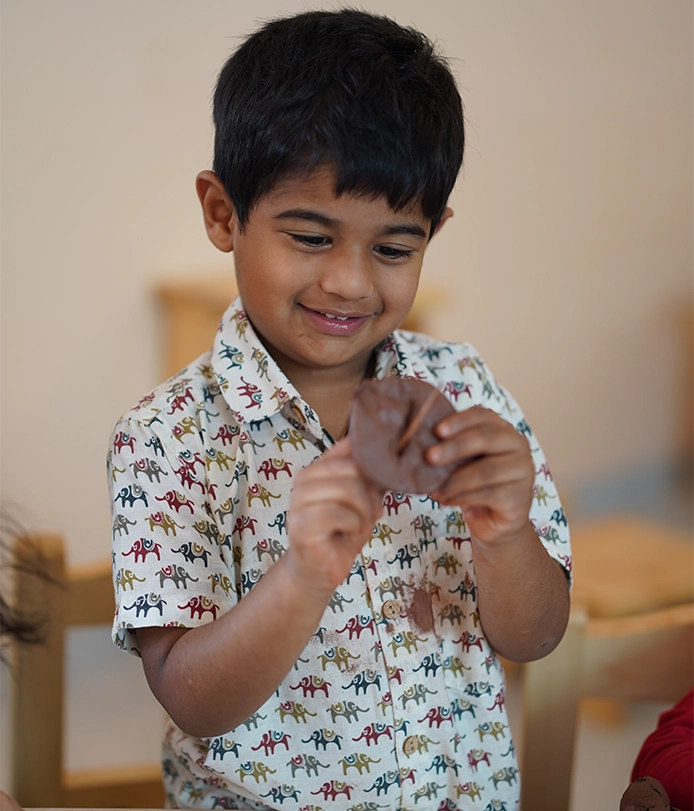
Play, too, engages the senses in movement, rhythm, and spatial understanding which are the very foundations of reading and writing. Skipping, clapping, or arranging toys in patterns builds a sense of sequence and order, helping children later to follow the flow of words and sentences.
While the arts give emotional and imaginative depth to language, play awakens its pulse and flow. Together they nurture the whole child – hand, heart, and mind – so that when reading and writing begin, they are not mechanical skills, but natural expressions of a rich inner life.
Why Waldorf Waits: The Timing of Literacy
Learning to read and write is not a race to be finished early but a journey that unfolds when the child is ready.
In Waldorf schools, formal literacy that includes decoding words and writing sentences typically begins around age six or seven, when children’s physical, emotional, and cognitive capacities align to support it naturally and joyfully.
Yet this does not mean that young children are falling behind in “reading” and “writing.” In the early years, they read through images and gestures, through the unfolding of a story or the changing colours in a painting. They write through play, drawing, and imitation, expressing what lives within them before they ever put words to paper. In this way, literacy begins in imagination, not abstraction.
By allowing this inner foundation to ripen, children meet written language with eagerness rather than pressure. When they finally begin to read and write words, the process feels alive and meaningful because it grows out of something they already love – stories, images, and expression.
This patient timing builds confidence, focus, and a genuine love for language. Instead of learning to decode mechanically, children learn to understand, feel, and communicate. Reading and writing then become not just skills, but ways of engaging deeply with the world which is a beginning that lasts for life.