

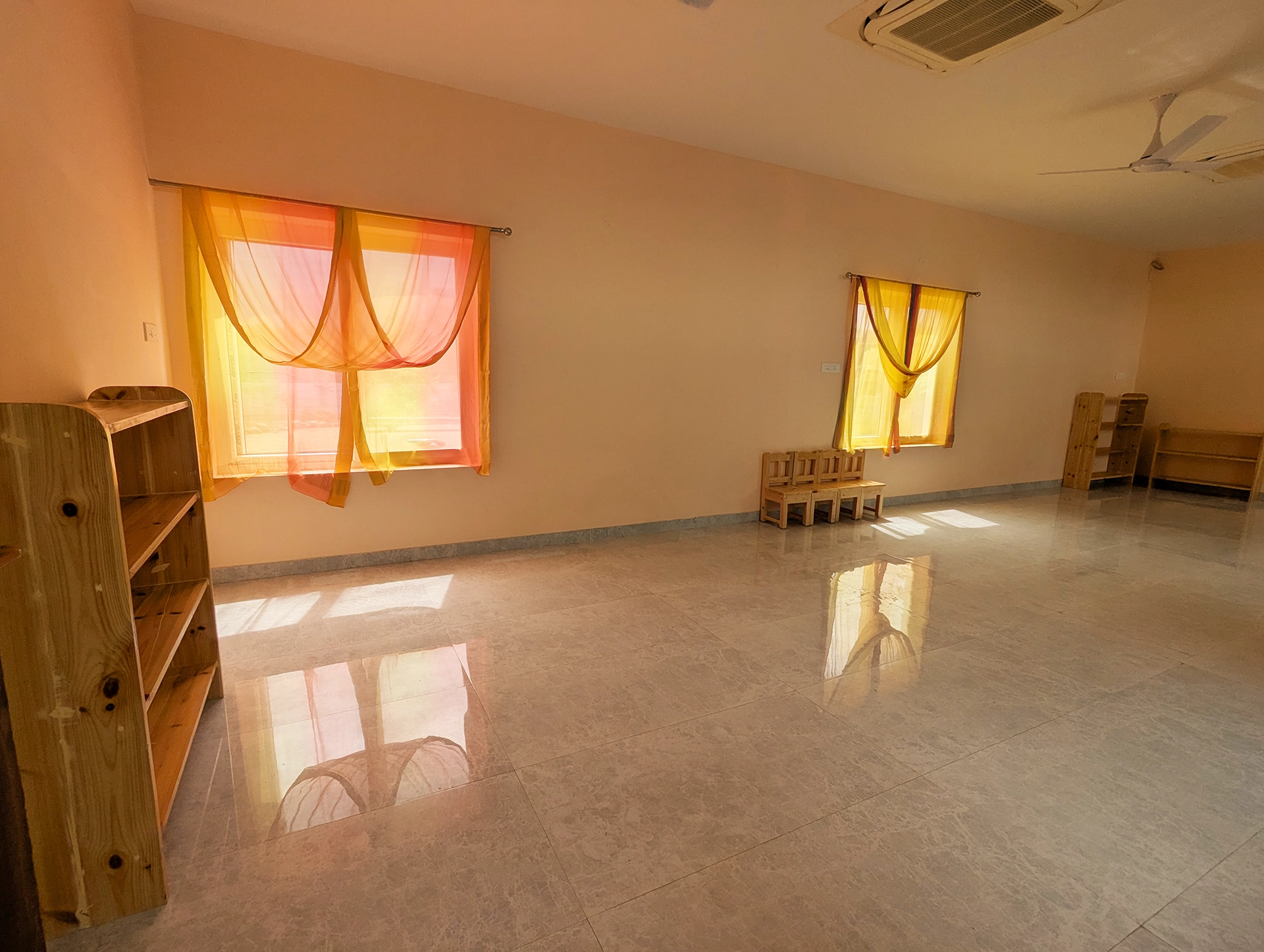
When one steps into a Waldorf classroom, the difference is felt immediately. Unlike conventional classrooms filled with bright charts, plastic furniture, and constant visual noise, a Waldorf classroom is designed to nurture calm, imagination, and a sense of belonging. Sunlight filters through soft curtains, the walls glow with gentle, blended colours, and the furniture carries the marks of craftsmanship.
There is quiet beauty in every detail, each chosen with purpose, from the colour of the walls to the texture of the materials. Here, the classroom itself becomes part of the child’s education, shaping how they feel, focus, and connect.
In Waldorf schools, the environment is not just four walls, benches, and chairs; it is a living space that helps children feel at home in the world and ready to meet it with curiosity and care.
A Space That Feels Alive
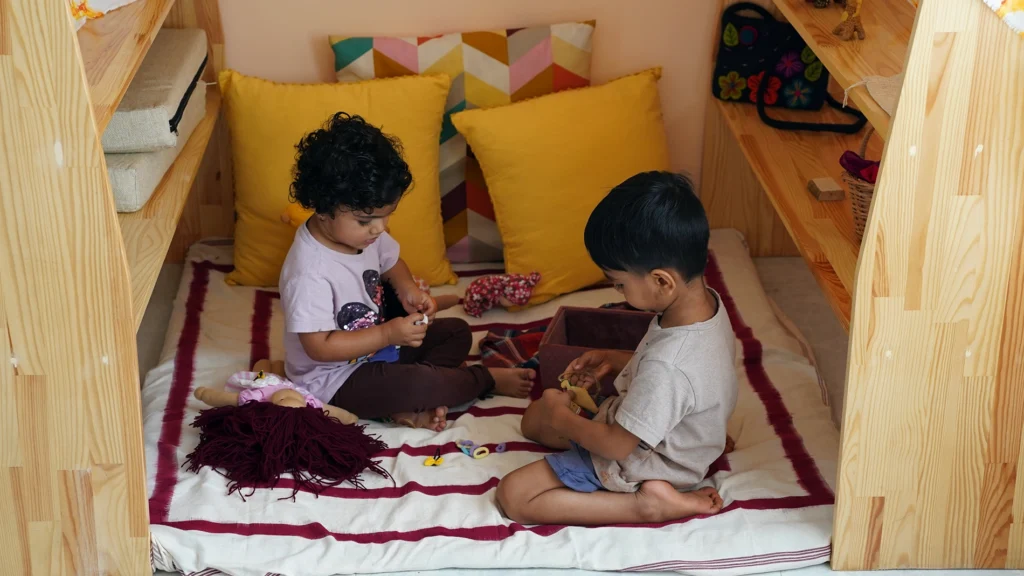
In a Waldorf classroom, everything in the space seems to breathe. Whether it is the natural light flowing in, the colours indoors that set the mood, or the textures that nurture senses — all work together in quiet harmony, welcoming the child in a warm embrace. The rooms are gracefully set up with fresh flowers, hand-dyed fabrics, and paintings made by the children themselves, giving the space a personal touch and sense of belonging.
Every element in the classroom is chosen with thoughtful intent, always in tune with how it will make the child feel. Translucent cotton curtains filter the soft sunlight filling the room with a gentle glow instead of a glare. The walls are painted in softly blended tones like warm peach for the kindergarten years, gentle reds and oranges in the lower grades, and shades of yellow, green, and deep blue as children grow older. These colours are not chosen at random for decoration alone, but to mirror the inner mood of each age — calm and nurturing for the young child, deeper and more reflective for the older one.
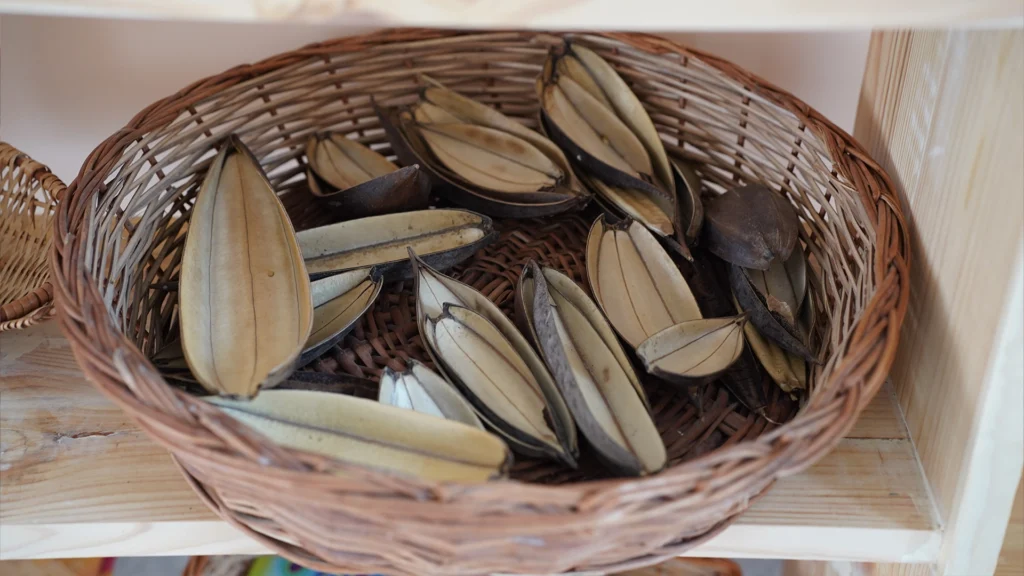
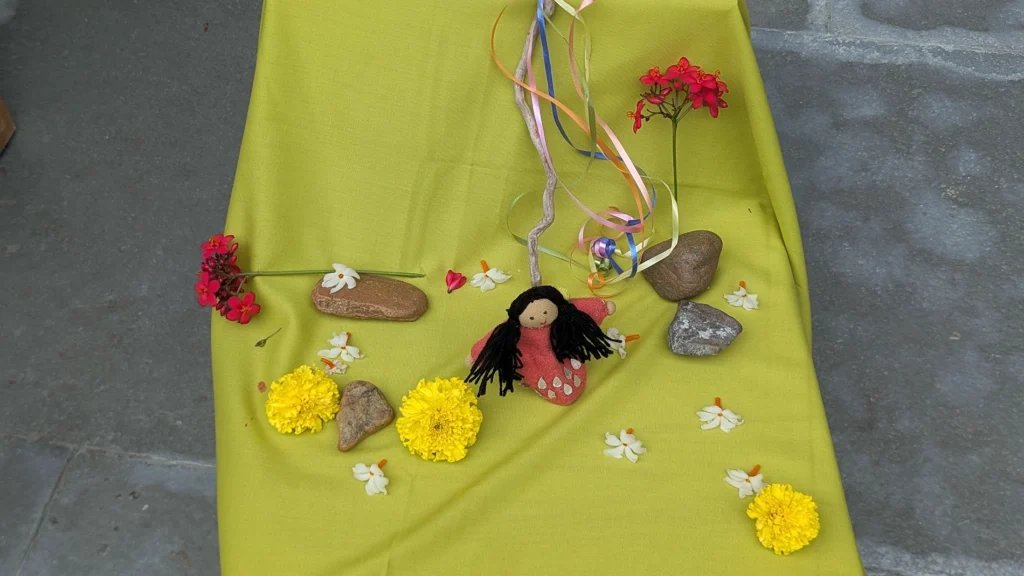
In one corner, the classrooms also reflect the rhythm of the seasons. Teachers arrange a small nature table that holds treasures from the season — pinecones in autumn, flowers in spring, a smooth river stone, a few marigolds in a clay bowl, shells or pebbles from a recent walk. This gentle change within the classroom invites quiet attention and reminds children of the living world beyond the walls.
This way Waldorf classrooms don’t overstimulate or distract with bright posters or plastic colours. Instead they create a space of warmth, calm, and beauty which welcomes the children to settle in and open themselves to learning.
Materials That Speak to the Senses
Just as colours and light shape the mood, materials shape how a child connects with their surroundings. In a Waldorf classroom, the furniture and materials are simple, natural, and handmade. There is nothing plastic or mass-produced here. Every object is chosen with care and intention.
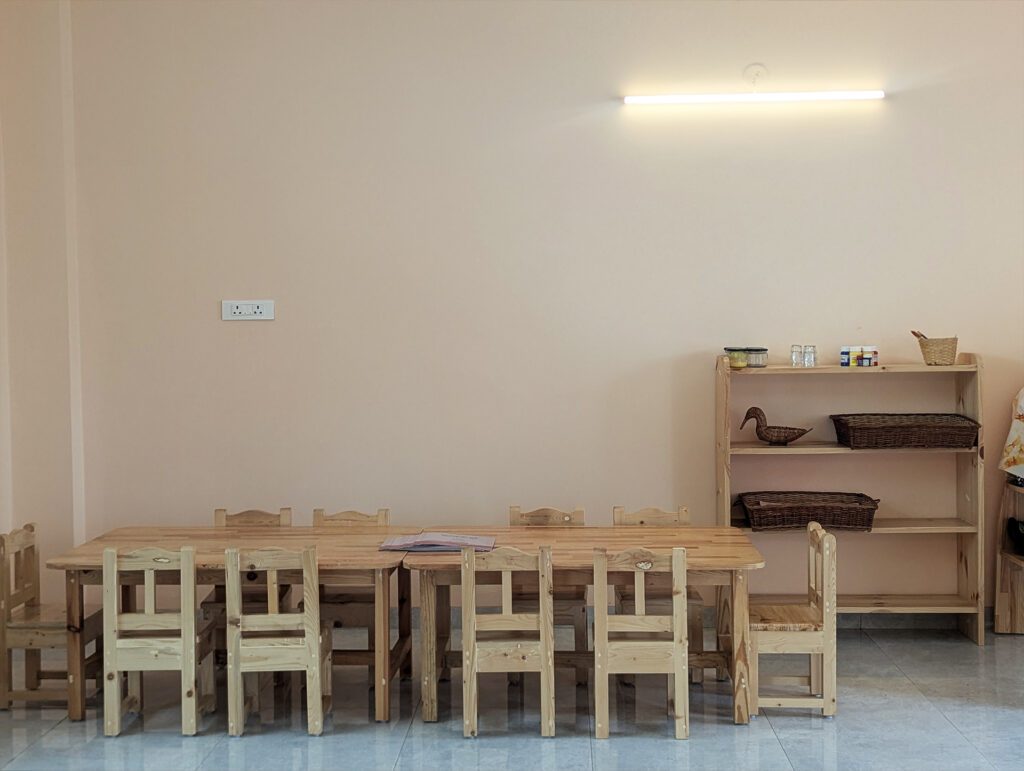
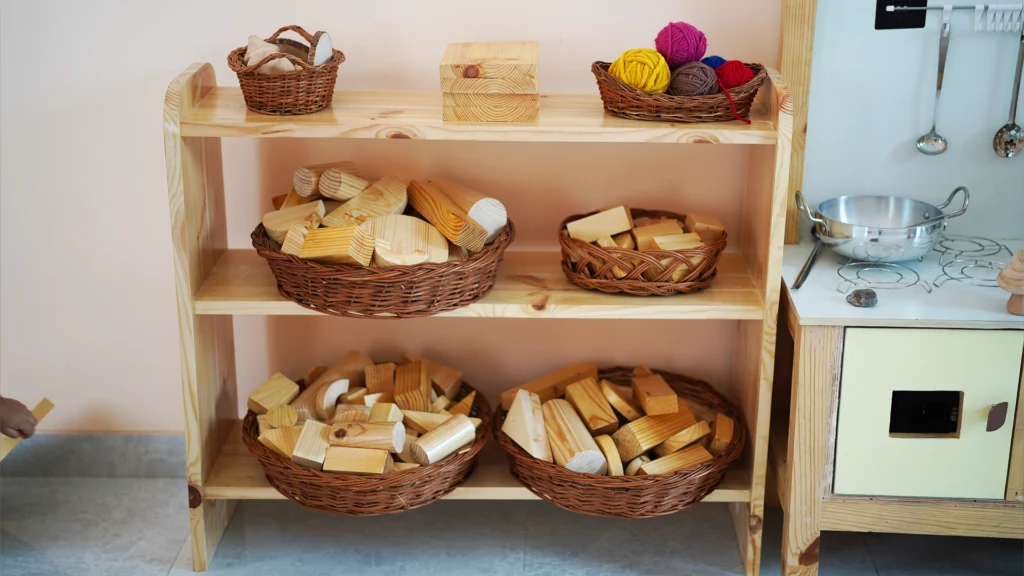
Tables and chairs are crafted from solid pine, carrying the warmth of their grain, the faint scent of wood, and the touch of human hands. Shelves hold baskets woven from cane, filled with playthings made of wool, cotton, and wood. In the smoothness of a pebble, the warmth of wood, the softness of wool, children’s senses come to life.
Even the Waldorf dolls, often sewn by the teachers themselves, have simple stitched faces and soft fabric bodies that invite gentle care and imaginative play.
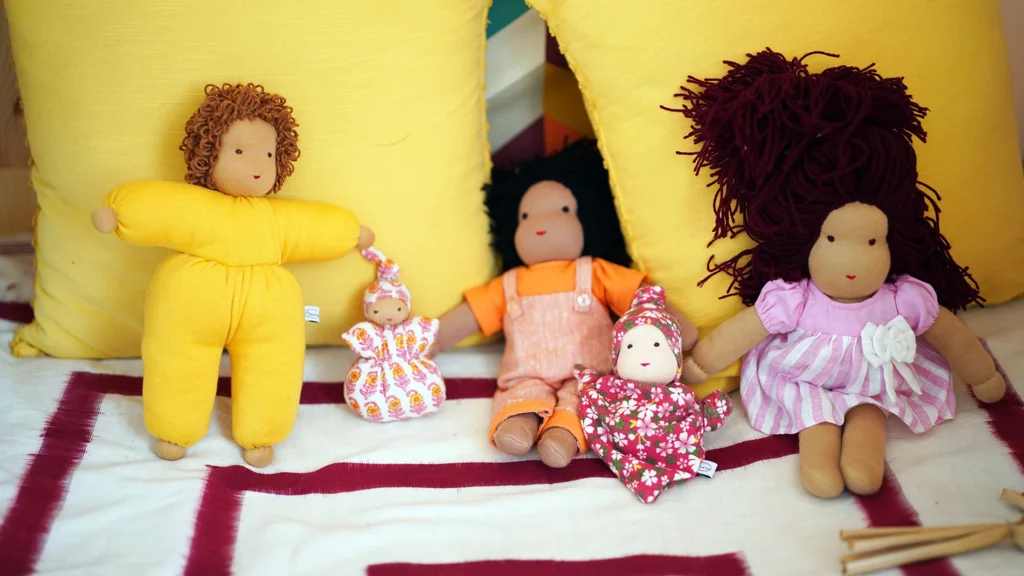
Such natural materials and textures invite touch and tenderness, grounding the child in real experience. They awaken a quiet awareness of quality, of how things feel and last. In such an environment, children learn to move with care, to handle things gently, and to notice beauty in simplicity. The classroom becomes a place where the senses are educated; where sight, touch, and even smell work together to build focus, calm, and presence.
The Order and Rhythm of the Room
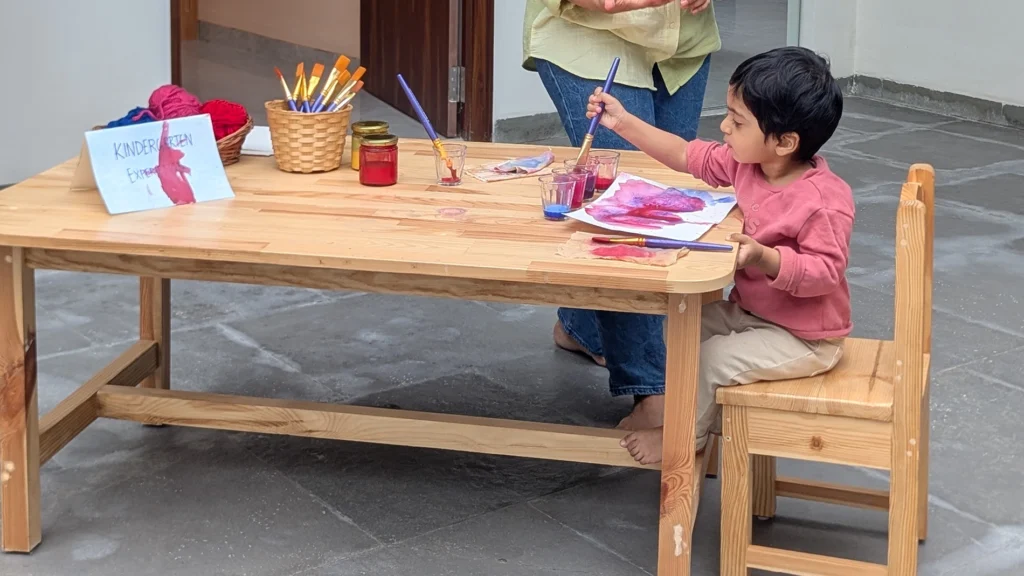
In every Waldorf classroom, there is a quiet sense of order that feels calm and intentional rather than rigid. Everything has its place and purpose. Toys rest in open baskets, brushes are washed after painting, and each morning begins with familiar songs. This gentle rhythm offers more than tidiness; it gives children a sense of security and balance.
The room itself moves with the day’s rhythm. Tables are cleared for circle time, then set again for painting or handwork. Each transition happens with care, helping children move from one activity to another with awareness. Over time, this rhythm becomes part of their inner discipline as they learn to begin, complete, and care for what they do.
As children move into the grade school years, this sense of order matures with them. Desks are arranged for focus and comfort, the blackboard becomes a living canvas for the teacher’s illustrations, and children’s work is displayed thoughtfully not for comparison, but as a celebration of care and effort.
Even transitions between classroom and outdoors carry rhythm and purpose, from quiet lesson time to open play and exploration. In this way, rhythm and order are not imposed but lived thereby giving children a balance of structure and freedom that supports both focus and joy in learning. Discipline here is not demanded but nurtured to grow naturally from the beauty and order that surround them.
A Place That Feels Like Home
A Waldorf space is designed with beauty, and care that feels like an extension of home. There is warmth in the way everything is arranged; the soft colours, the wooden furniture, the handwoven rugs underfoot. There is a quiet hum of life in the air from the beeswax candles, the scent of fresh food from a festival morning, or the faint aroma of crayons made from beeswax.
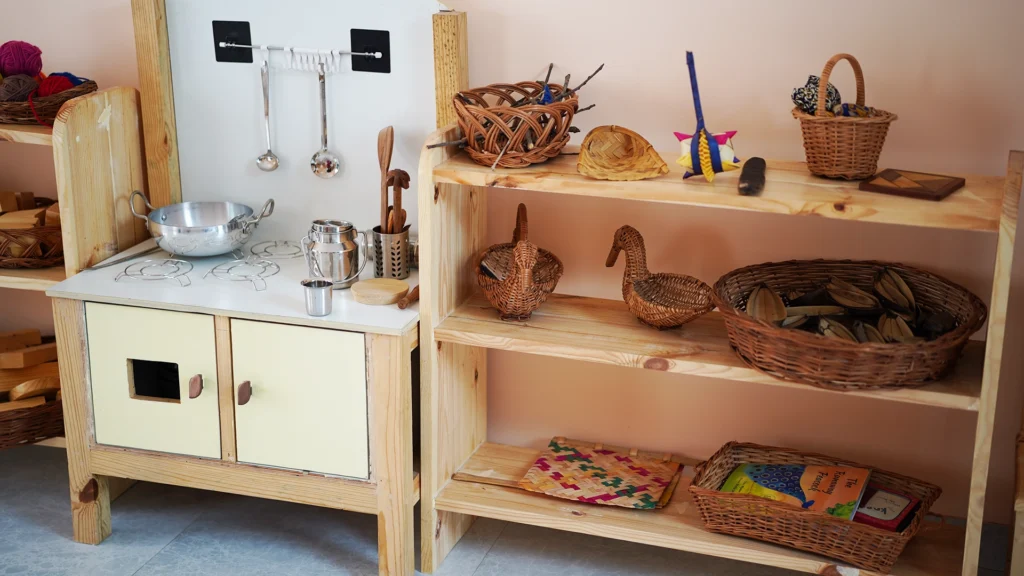
Children slip into this space with ease, knowing it as familiar and welcoming. There is room to move, to rest, to create. Younger children may curl up with a story in a cozy corner, while older ones gather around a table for painting or recitation. Teachers too are part of this sense of home as they bring steadiness and warmth, greeting each child by name, preparing the room with care, marking each festival and season with simple beauty.
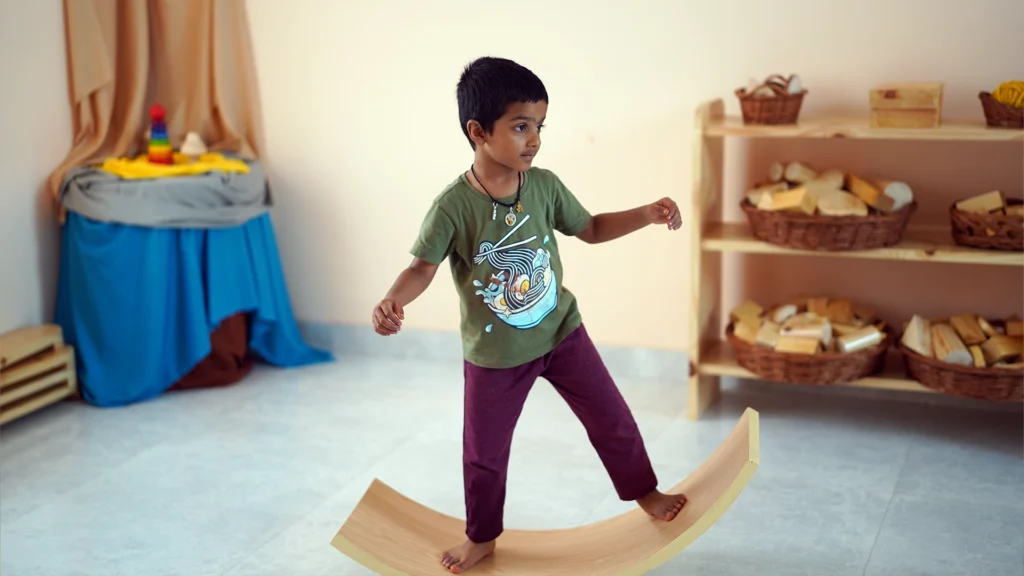
The teacher’s personal touch fills the room with life and bears the mark of love and attention. The blackboard comes alive with drawings made by hand of a picture that holds the essence of the lesson, drawn with quiet care. Simple handmade objects bring a sense of rhythm and belonging to the space.
When a space is made with such care, children sense it. They too begin to care for their surroundings, their work, and one another. Within this calm and beauty, children find the confidence to explore and the freedom to grow at their own pace.