

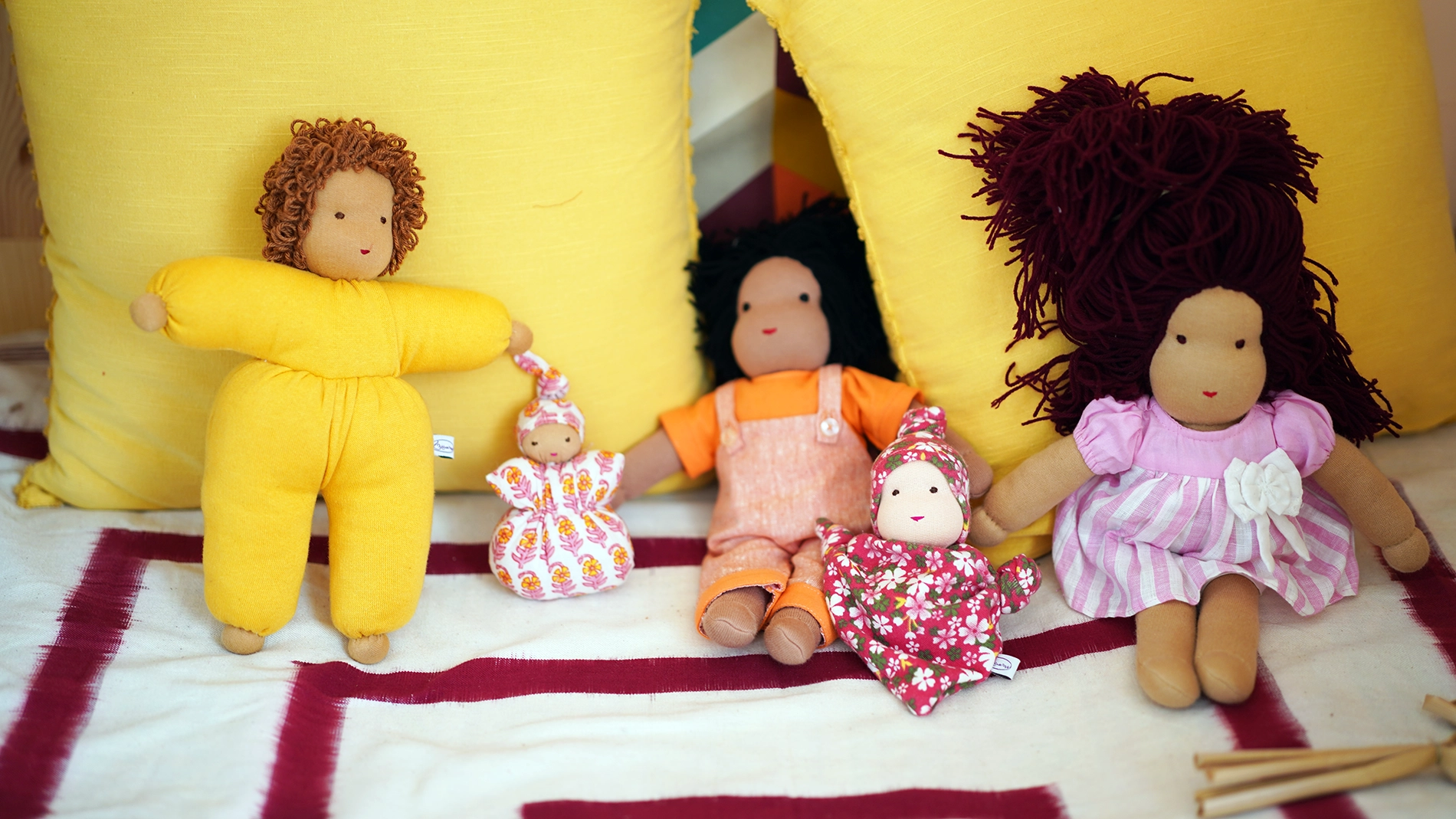
A Waldorf doll is not just a toy. It is made with the belief that what a child holds and plays with shapes how they feel and grow. Behind this lies the understanding that childhood is a time to protect imagination and to fill the child’s world with warmth, beauty, and love. For this reason, Waldorf dolls are created to nurture imagination, empathy, and tenderness — qualities that unfold naturally when children are surrounded by things made with care and love.
The simple stitching, gentle expression, and feel of wool beneath the fingers speak of human touch and intention. This simplicity invites the child to imagine, nurture, and create stories of their own. In the hands of a child, the doll becomes more than something to play with. It becomes part of their world, giving space for the inner life to unfold, one story, one gesture, one day at a time.
Waldorf Doll is More than a toy: a companion for childhood
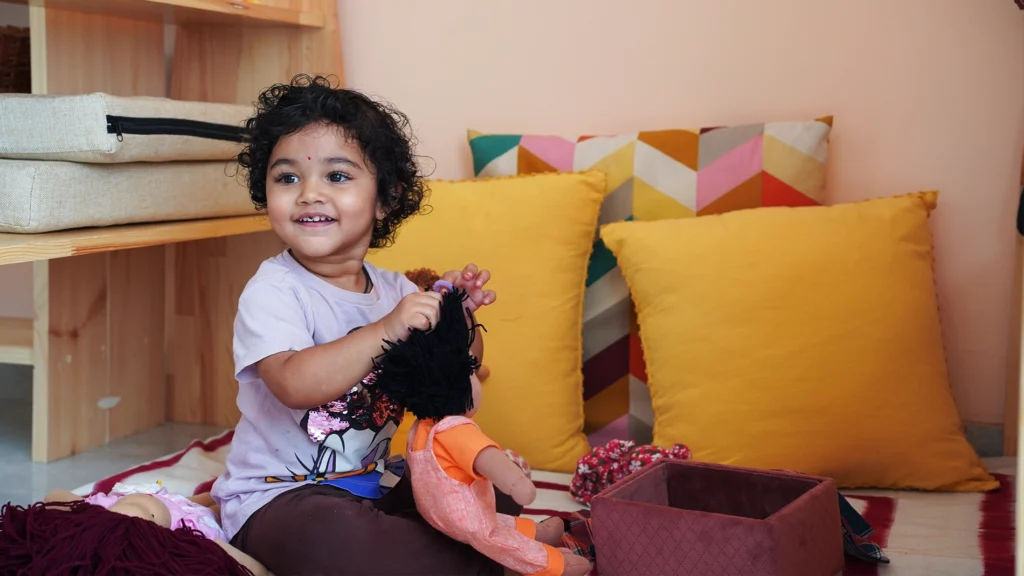
For a young child, a doll is not just a plaything but something to hold, to comfort, and to care for. In Waldorf education, this relationship is seen as deeply meaningful. Because the doll’s features are simple and open, the child can imagine a full range of emotions — joy, sadness, surprise, or thoughtfulness.
In this way, the doll reflects the child’s own inner life and it becomes more than something to entertain. It listens, travels, and grows alongside them as a steady, comforting presence that helps the child make sense of both the outer and inner world.
When a child wraps the doll in a blanket, rocks it to sleep, or takes it along on a walk, they quietly practise empathy and connection. Through these small gestures during play, it becomes a gentle rehearsal for love and care as children learn not just about the world, but about themselves too. The doll becomes a companion in the child’s journey through which they express and understand feelings, stories, and experiences.
The Beauty of Simplicity in a Waldorf Doll
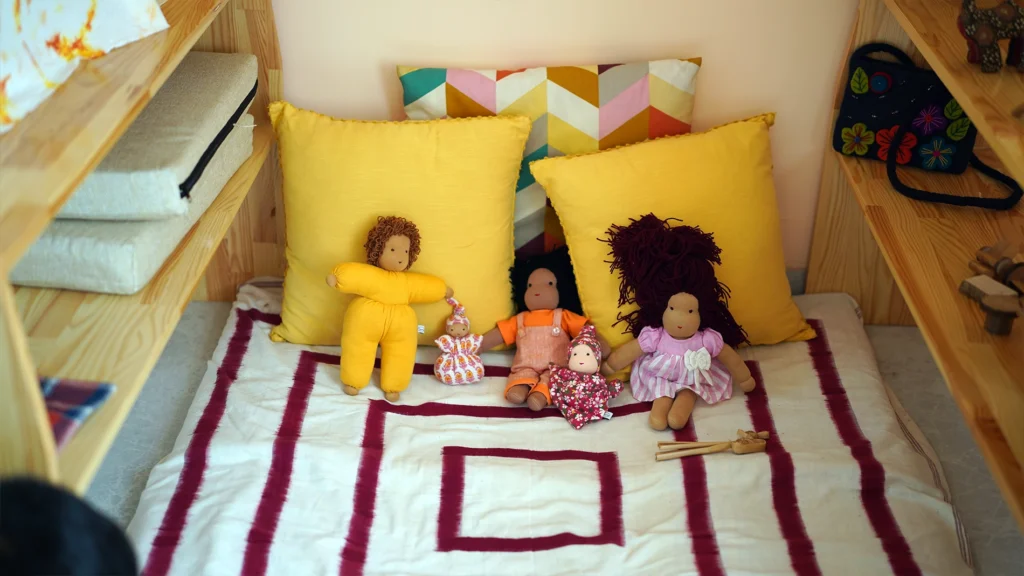
At first glance, a Waldorf doll may seem plain with no flashy clothes, no glassy eyes, no moving parts. But this simplicity is intentional. It leaves space for the child’s imagination to fill in what is not shown. A small stitched smile can become a laugh or a sigh, depending on the child’s mood. In this way, the doll’s expression changes as the child’s feelings do.
Unlike mass-produced dolls that come with fixed expressions and elaborate details, a Waldorf doll leaves room for possibility.
The absence of perfection is what makes it alive in play. The soft shape, the natural colours, the handmade clothes — all speak of warmth and realness. Simplicity, in this sense, is not a lack but a gift. It invites imagination, empathy, and a sense of peace that comes from things made with care rather than excess.
Made by Hand, Filled with Warmth – How Waldorf Dolls are Made?
Every Waldorf doll begins in human hands, not in a factory. It is carefully crafted at a table where a teacher, parent, or craftsperson works slowly and with care. Children naturally feel this difference. When something is made by hand, even a simple handkerchief tied to resemble a doll, it holds a special kind of meaning. They sense the care in it, and it becomes more precious because someone made it for them.
The process is unhurried: wool is brushed, untangled and stuffed by hand, the head is shaped and tied with thread, and the face is gently stitched, one small feature at a time. Nothing about the doll is hurried or identical to another. Each carries the quiet imprint of the maker’s warmth and intention.
The materials, too, are chosen with thought. The body is made from cotton or linen, the stuffing from soft sheep’s wool that holds warmth, so the doll feels almost alive when held. The hair is made from yarn or mohair, sewn strand by strand. These natural materials breathe, age, and soften over time alongside the child.
Because each doll is handmade, it also carries a sense of individuality. No two dolls are ever exactly alike, just as no two children are. This connection between maker and child where one pair of hands is creating something for another brings a quiet lesson in love, patience, and craftsmanship.
Play That Builds the Inner World
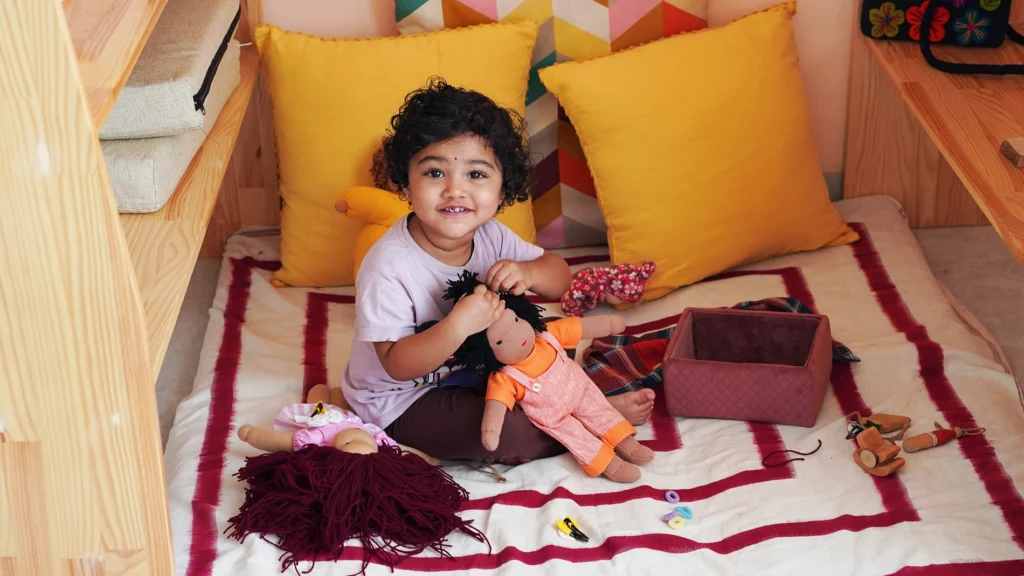
Unlike many modern toys that move, speak, or glitter on their own, a Waldorf doll does very little by itself, and that is its gift. It doesn’t direct an emotion or story; it quietly waits for the child to bring it to life. In this stillness, space opens for the child’s imagination to unfold. The doll can laugh, cry, or sleep depending on what the child feels and imagines. In this way, it becomes a gentle mirror of the child’s own emotions and experiences, helping them grow in empathy, patience, and understanding.
Through imaginative play, children weave stories, care for their dolls, dress them, and tuck them into bed. They imitate the rhythms of daily life in pretending to feed, dress, comfort, and care for the dolls — not because they are instructed to, but because it arises naturally from within.
The Waldorf doll, in its quiet simplicity, invites this kind of play that nourishes the inner life. Each act of care, each story imagined, becomes a small step in the child’s unfolding sense of love, belonging, and connection with the world.
FAQ On Waldorf Dolls
What Is The Purpose Of A Waldorf Doll?
A Waldorf Doll gives a child a gentle friend to hold, care for, and speak to. The soft form and simple face leave space for the child’s own feelings and stories. “The fewer fixed details, the more the child brings to play.” This is why the doll often becomes a quiet companion through the day’s small rhythms—being fed, wrapped, rocked, and taken along on walks.
Why Are Waldorf Dolls So Expensive?
They are made by hand, slowly. Natural Fabrics like Cotton for the skin and Sheep’s Wool for stuffing are costlier than synthetics. Each head is shaped, tied, and stitched; hair is sewn strand by strand with Yarn or Mohair; clothes are cut and stitched in small batches. The price reflects time, skill, and fair pay for craftspeople, along with the use of breathable, long-lasting Materials.
What Age Is Appropriate For A Waldorf Doll?
There is a good match for every stage.
For 1.5–2.5 Years: A small “clutch” doll with a soft body and very simple face. Easy to hold and mouth.
For 3–5 Years: A medium doll with sewn hair and simple clothes for dressing and undressing.
For 6+ Years: A larger doll with more detailed hair and layered clothing that invites care, repair, and simple sewing.
Are Waldorf Dolls Good For Babies?
Yes, if you choose the right make. Pick a very soft, lightweight Doll with firmly sewn features, no hard parts, and no loose accessories. For babies who mouth everything, avoid buttons, beads, or long hair. Adult supervision is wise, like with any Baby Toy.
Are Waldorf Dolls Safe?
Choose reputable makers who use Natural Fabrics, colour-fast Dyes, and strong stitching. Avoid small detachable parts for under-3s. Check seams regularly. Safety is less about labels and more about how the Doll is built—soft body, secure stitching, and age-right clothing.
Do Boys Play With Waldorf Dolls?
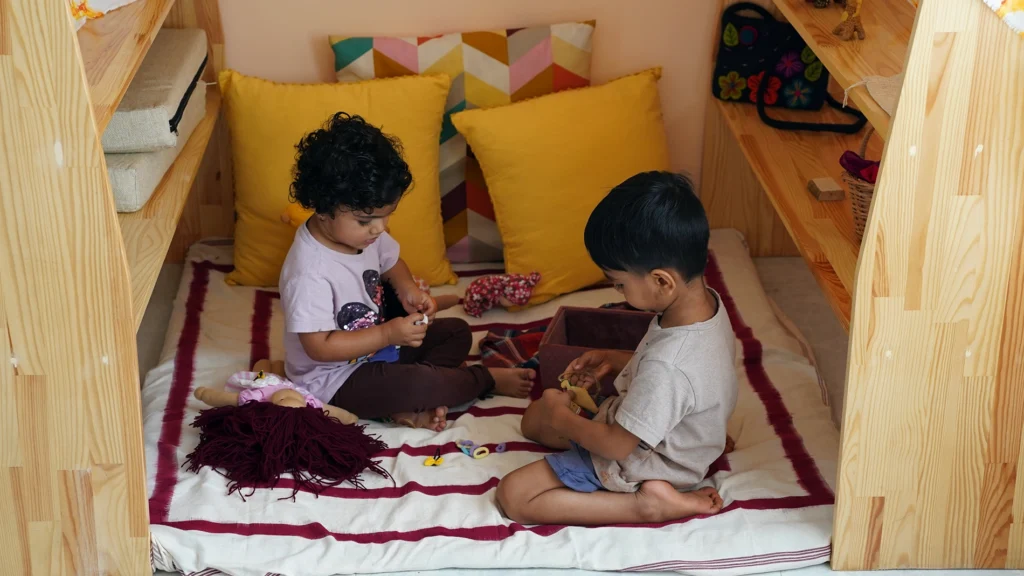
Yes. Caring, carrying, and storytelling belong to every child. Many boys happily tuck a doll into a sling, “cook” pretend food, or build a bed from blocks. These small acts build patience, empathy, and everyday hands-on skill.
Can We Make Waldorf Doll At Home?
Yes. Even a handkerchief doll—cloth tied with a soft head—has charm. Children sense the love in handmade things. If you sew a full Doll, take it slow. Invite your child to choose colours or a name. The making itself becomes a memory.
Can A Waldorf Doll Help With Transitions?
It can. A familiar Doll eases times like starting School, welcoming a Sibling, or bedtime worries. Children “tell” the doll what they feel, or act out the day. This gentle rehearsal helps them settle from within.
How Do I Care For A Waldorf Doll?
Treat it like a cherished garment. Use spot cleaning with mild soap and cool water. Press gently with a towel and dry in shade. For yarn hair, comb with fingers, not a brush. If a seam opens, mend with a few hand stitches—children love seeing small repairs; it teaches care and keeping.