
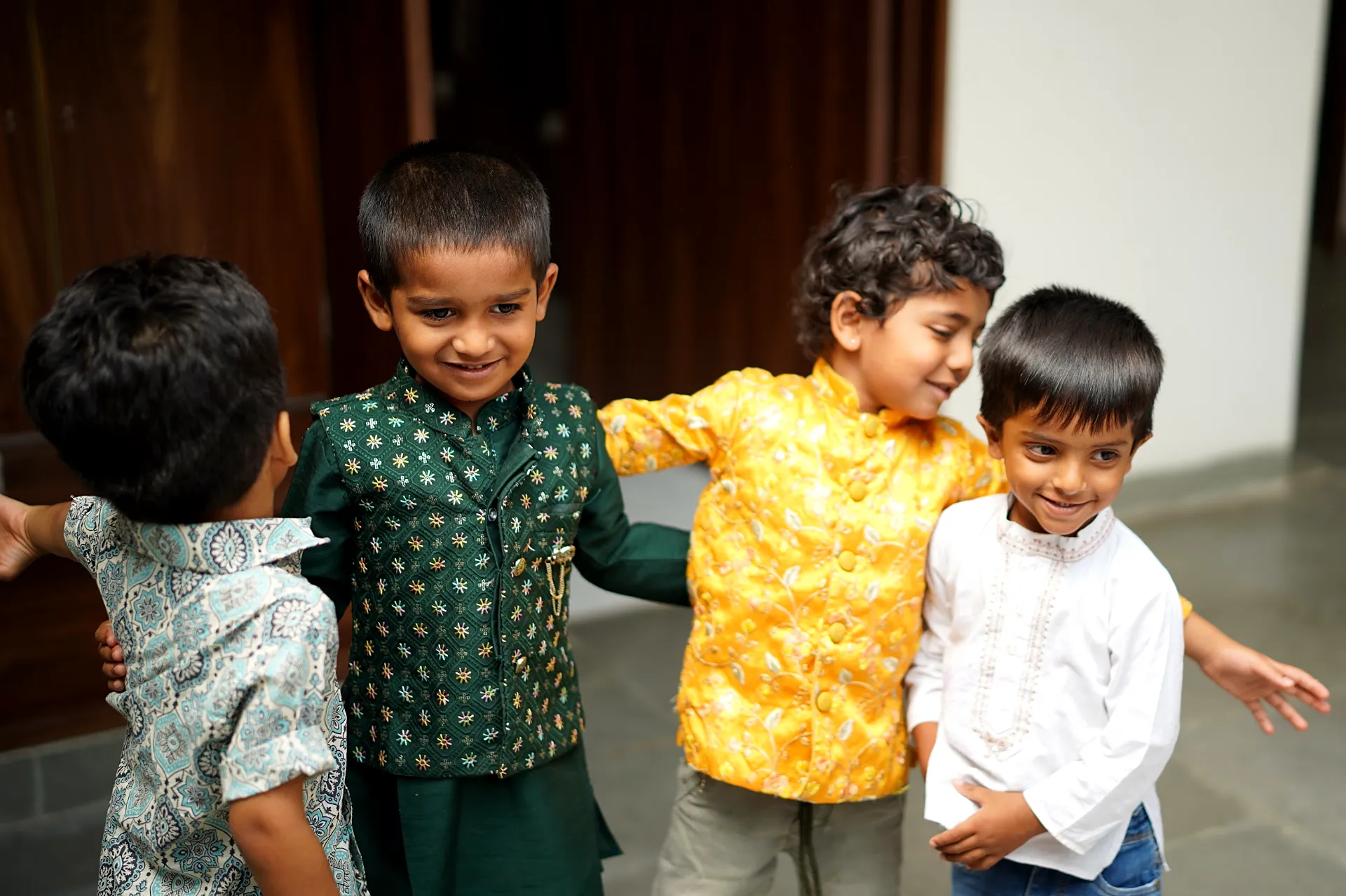
If you have ever pulled a sweaty, itchy toddler out of a polyester party dress, you already know half the answer. Fabric matters more for children than for adults, and in India, where most of the year is hot, humid, or both, it matters even more.
For most children, most of the time, the best fabric is cotton. But “cotton” on a label can mean very different things, and it’s important that we understand what we are putting on our children’s skin.
Why children’s skin needs more care than ours
A child’s skin is not a smaller version of adult skin. A review on newborn and child skin care in Anais Brasileiros de Dermatologia explains that a baby’s outer protective layer is thinner than an adult’s, loses water more easily, and absorbs what touches it more readily. This barrier keeps developing through the first year and stays more permeable than adult skin as children grow.
Why cotton suits the Indian climate
Cotton breathes and absorbs sweat, exactly what a child needs in 35 degree heat or a sticky monsoon night.
Take prickly heat (miliaria), the red, itchy bumps so many Indian children get every summer. DermNet lists hot, humid environments and synthetic clothing against the skin among its triggers, and recommends loose, breathable cotton. Cotton lets trapped sweat escape.
Cotton is also the fabric most often suggested for sensitive skin. The UK’s National Eczema Society calls it the most commonly recommended material for eczema, and notes that many people find polyester and nylon cause overheating and sweating, which sets off itching.
Why linen works for Indian climate
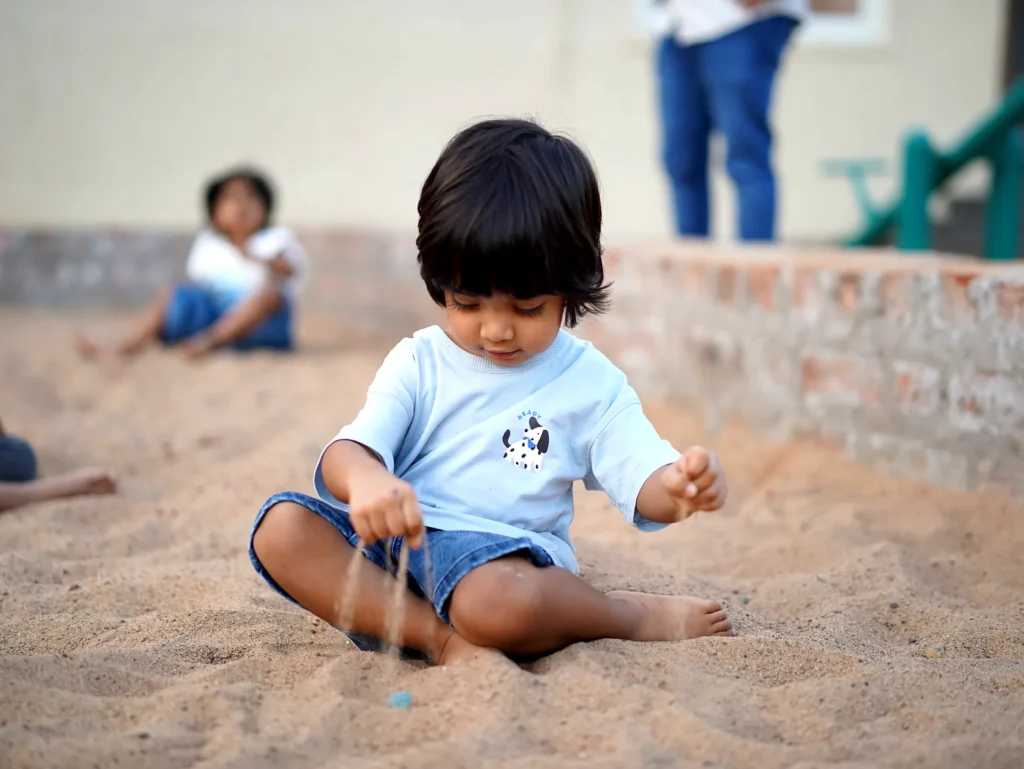
Linen, made from the flax plant, may suit Indian summers even better than cotton. It is very breathable, absorbs moisture well, dries quickly, and gets softer with every wash. The trade-offs: it creases easily and costs more. For loose summer shirts, dresses and pants, a cotton-linen blend gives you linen’s airiness with cotton’s softness.
Why bamboo needs a closer look
Bamboo is marketed as natural, but almost all bamboo fabric is bamboo viscose (rayon), made by dissolving the plant pulp and turning it back into fibre. In 2009, the US Federal Trade Commission stated that this process uses harsh chemicals and that the finished fabric does not keep the bamboo plant’s antimicrobial qualities. If you buy bamboo, look past words like “eco” on the tag and check for third-party certification. GOTS does not certify bamboo viscose as an organic fibre, so a GOTS label on a “bamboo” garment usually means it is mostly organic cotton with some bamboo blended in.
Organic cotton vs pure cotton: what actually matters for skin
Many parents pay a premium for organic cotton believing it is safer for skin. Its real benefits are in how it is grown: no synthetic pesticides or fertilisers, and less harm to soil, water and farmers. That matters for the planet, but “organic” on a tag tells you nothing about what happened to the fabric after harvest. Organic cotton dyed with a questionable dye can irritate skin more than conventional cotton dyed responsibly.
For a child’s skin, two things matter more: that the garment is pure cotton, and that the dyes are safe. India has banned 112 azo and benzidine-based dyes that can release harmful amines, so ask brands whether their dyes are free of these. OEKO-TEX Standard 100 tests finished textiles for banned azo dyes and hundreds of other harmful substances, with its strictest class for babies up to age three. GOTS also controls dyes, and its “organic” label requires at least 95% certified organic fibre (“made with organic” allows 70% to 95%). Trust a certification, not the word “organic” by itself.
How to read a fabric label
Labels in India are inconsistent. The Ministry of Textiles is reportedly finalising mandatory labelling rules requiring fibre percentages, but until then, read carefully:
100% cotton or linen is what you want for everyday wear next to the skin.
“Cotton rich” or “cotton blend” often means a lot of polyester. Look for the actual percentage.
“Pure cotton feel” or “cotton touch” usually means it is not cotton at all. Many commercial T-shirts and shirts use polyester made to look and feel like cotton.
“Dry clean only” on a toddler’s kurta means it was designed for photographs, not for a child.
With no useful label, use your hands. Cotton feels cool and dry, creases when scrunched, and lacks the slippery sheen of most synthetics.
Cotton vs blends: an honest comparison
Blends are not automatically bad.
| Fabric | What it does well | Where it falls short for children |
|---|---|---|
| 100% cotton | Breathes, absorbs sweat, gentle on sensitive skin | Shrinks if washed hot, wrinkles, slow to dry in monsoon |
| Cotton with 3 to 5% elastane | Stretch and shape for leggings and fitted bottoms | Slightly less breathable; fine in small amounts for shorter wear |
| Poly-cotton (often 65/35) | Cheaper, fewer wrinkles, dries fast | Traps more heat and sweat; pills over time |
| Viscose, modal, bamboo viscose | Very soft, drapes well, fairly breathable | Weaker when wet, loses shape, made through multi-step chemical processing |
| 100% polyester or nylon | Durable, cheap, bright prints | Holds heat and sweat against the skin; most likely to trigger prickly heat and itching. Not comfortable. |
A useful rule: the closer a garment sits to the skin, and the longer your child wears it, the more natural fibre it should have.
A few practical habits
Wash new clothes before the first wear to remove finishing chemicals and excess dye.
Choose loose fits in summer. Even good cotton causes heat rash if it is too tight.
Watch your child. Scratching, red patches at the waistband or tugging at a collar are signals worth listening to.