

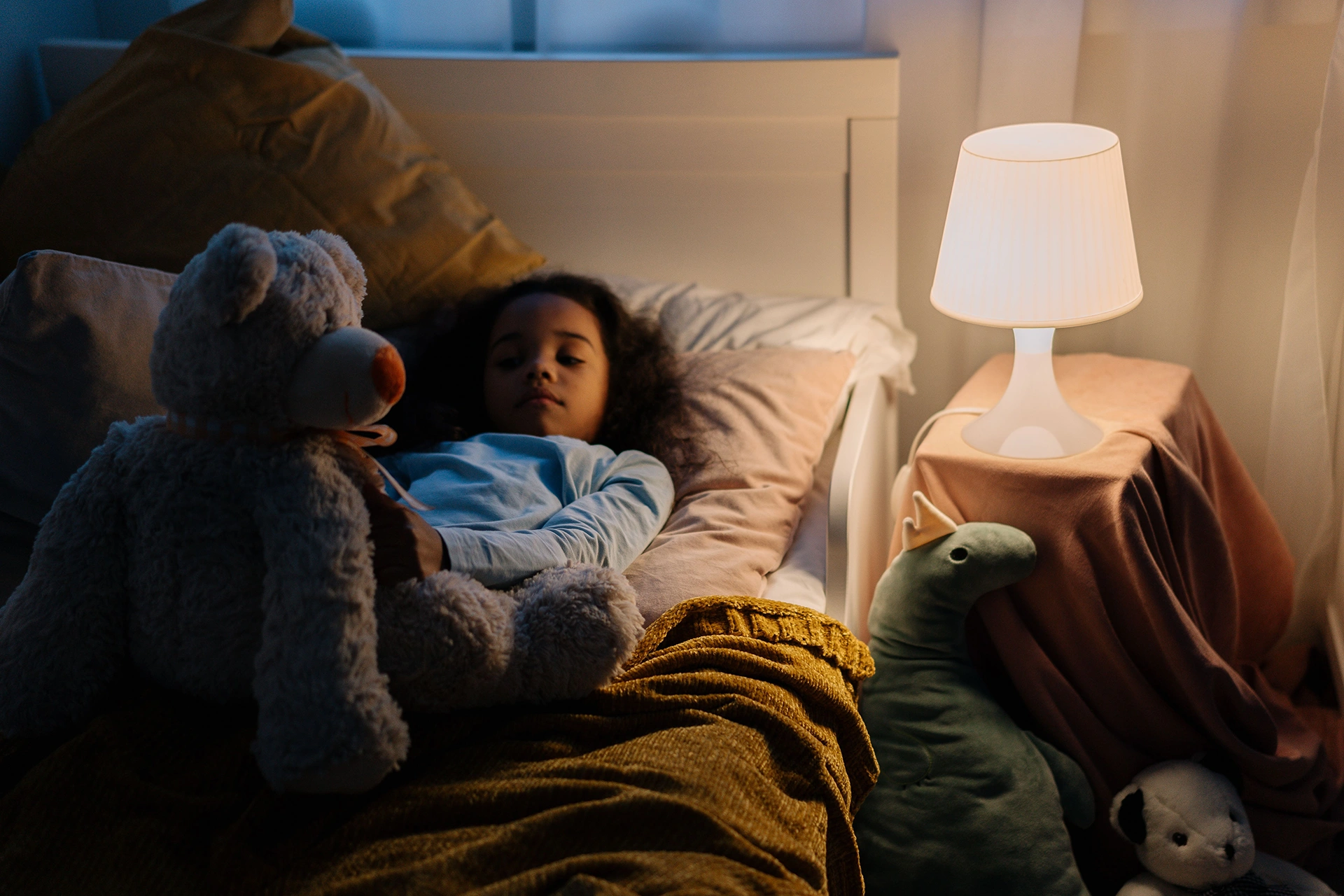
Sleep is as important to childhood as nourishing food, outdoor play, movement, and loving relationships. It gives the growing body time to rest and the mind time to settle. A well-rested child often has more energy to play, explore, concentrate, and move through the day with greater ease.
Healthy sleep is not only about the number of hours a child sleeps; the rhythm of the day and the transition into bedtime matter too.
How Much Sleep Do Children Need?
Every child has different sleep needs, but general guidelines that offer a helpful starting point are –
- 2–3 years: 11–14 hours, including daytime naps
- 3–5 years: 10–13 hours
- 6–7 years: 9–12 hours
These numbers are not meant to become a strict target. Some children naturally need a little more sleep, while others need less. It can be more useful to notice whether a child wakes rested, has enough energy through the day, and is generally able to settle at night.
What Does a Good Bedtime Routine Look Like?
For a young child, bedtime is a gradual transition from the activity of the day into rest. When the same sequence happens each evening, children begin to recognise these familiar cues and know that the day is coming to an end.
A bedtime routine does not need to be long or elaborate. A few quiet rituals, followed consistently, are often enough. It could include:
- Finishing dinner at a regular time
- Having a bath or washing up
- Changing into comfortable nightwear
- Brushing teeth
- Reading a favourite story
- Singing a lullaby or saying a short prayer
- Turning off the lights and going to bed
How Can Children Calm Down Before Bed?
The hour before bedtime can be a time to gradually slow the pace of the day. After a day filled with movement, play, conversation, and new experiences, children need some space to become quiet before they are ready for sleep.
Quiet moments such as reading together, drawing, singing, listening to gentle music, or talking about the day can all become part of this transition.

What matters is not finding the perfect activity, but creating a calmer atmosphere. Screens are best kept away from this time. The light and stimulation from televisions, tablets, and phones can make it harder for children to settle into sleep. A quieter evening gives the body and mind a natural opportunity to slow down.
How Does the Daily Rhythm Affect Sleep?
Good sleep begins long before bedtime. A child who has had time to move, play outdoors, eat regular meals, and experience quieter moments through the day has had opportunities for both activity and rest. These experiences help the body gradually move through its natural rhythm of waking, activity, nourishment, and rest.
This is why a predictable daily rhythm can support healthy sleep. It does not mean planning every hour, but allowing familiar patterns to unfold each day. When children experience a balance between movement and stillness, activity and rest, the transition into bedtime can feel more natural.

What If a Child Finds Bedtime Difficult?
There will always be evenings when bedtime does not go as smoothly as usual. A child may be overtired, excited, unwell, or simply adjusting to a change in the usual rhythm. These moments do not necessarily mean that the bedtime routine is not working.
Returning to the familiar sequence can offer reassurance. A little extra time with a story, a cuddle, or simply sitting nearby may be all that is needed on some evenings. If bedtime continues to be difficult, small changes to the rhythm of the day can sometimes help. More time outdoors, less screen time, or bringing bedtime a little earlier may be enough to make evenings feel more settled.
There is no perfect bedtime routine. What matters is finding a rhythm that feels calm, consistent, and suited to the child.