
Waldorf education takes a different approach to the timing of literacy. Formal reading and writing generally begin in the early primary grades, often in Grade 1 around the age of six or seven. The foundations for literacy are built much earlier, and children develop their skills step by step rather than being expected to become fluent readers within a fixed period.
The timing may be different from what some parents are used to seeing, but the goal remains the same: children learn to read and write with growing confidence and understanding.
Why Does Waldorf Education Wait?
Waldorf education waits to introduce formal reading and writing because these are abstract skills. A young child can learn to recognise letters and memorise sounds quite early, but reading with understanding requires more than knowing the alphabet. It involves listening carefully, understanding language, remembering what has been read, and connecting symbols on a page with meaning.
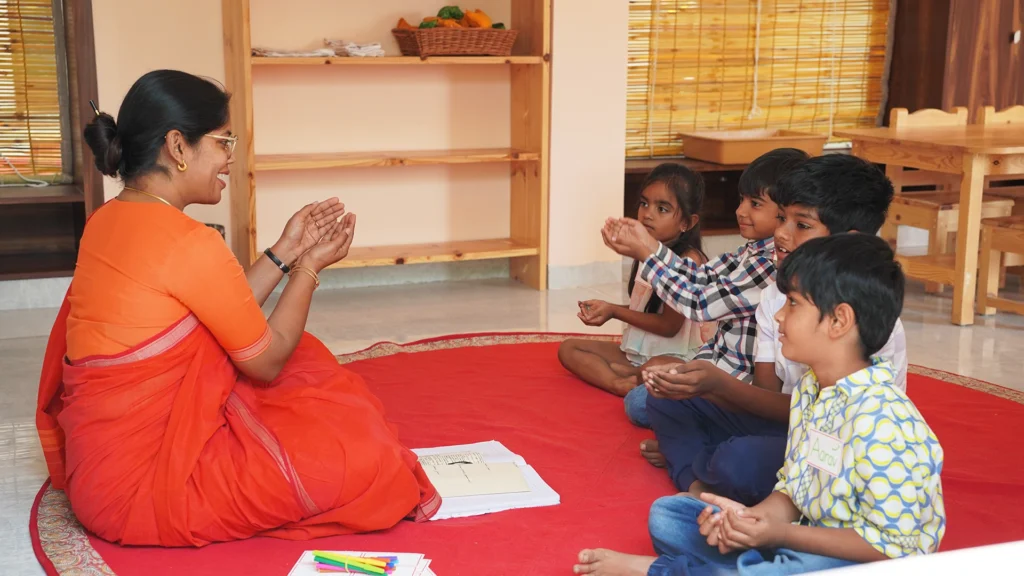
The aim is therefore not to see how early a child can read, but to give them the time and experiences that help reading become a meaningful skill. Formal literacy is introduced when children are ready to move from the spoken word and the world of stories into written language with greater understanding.
Does Waiting Mean Waldorf Children Learn to Read Late?
Learning at a different age does not automatically mean learning late. Children develop literacy at different rates, whether they attend a Waldorf school or another kind of school. One child may take an early interest in letters and books, while another may need more time before reading begins to take shape.
Once formal literacy begins, reading and writing are taught intentionally and progressively. Children move from letters and sounds to words, sentences, and eventually independent reading.
The goal is not simply to reach an early reading milestone. It is to develop strong language, comprehension, and a meaningful relationship with books and written language as children grow into confident readers.
What Does Reading and Writing Look Like in a Waldorf Classroom?
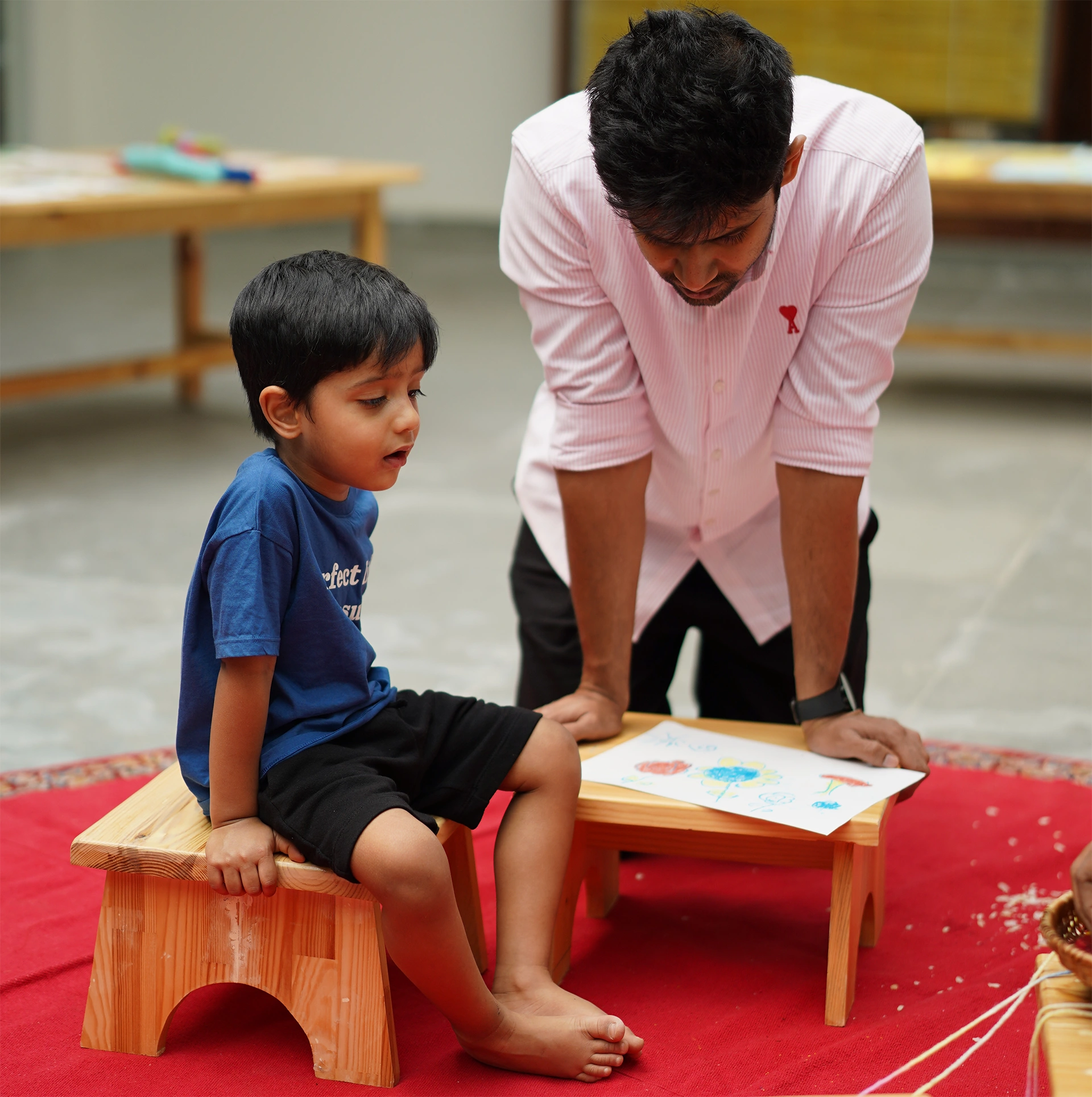
In a Waldorf classroom, reading and writing are introduced through stories, pictures, movement, conversation, and written work rather than beginning with worksheets and textbooks. Children listen to stories, retell them, draw from them, and gradually connect the spoken word with written letters and words.
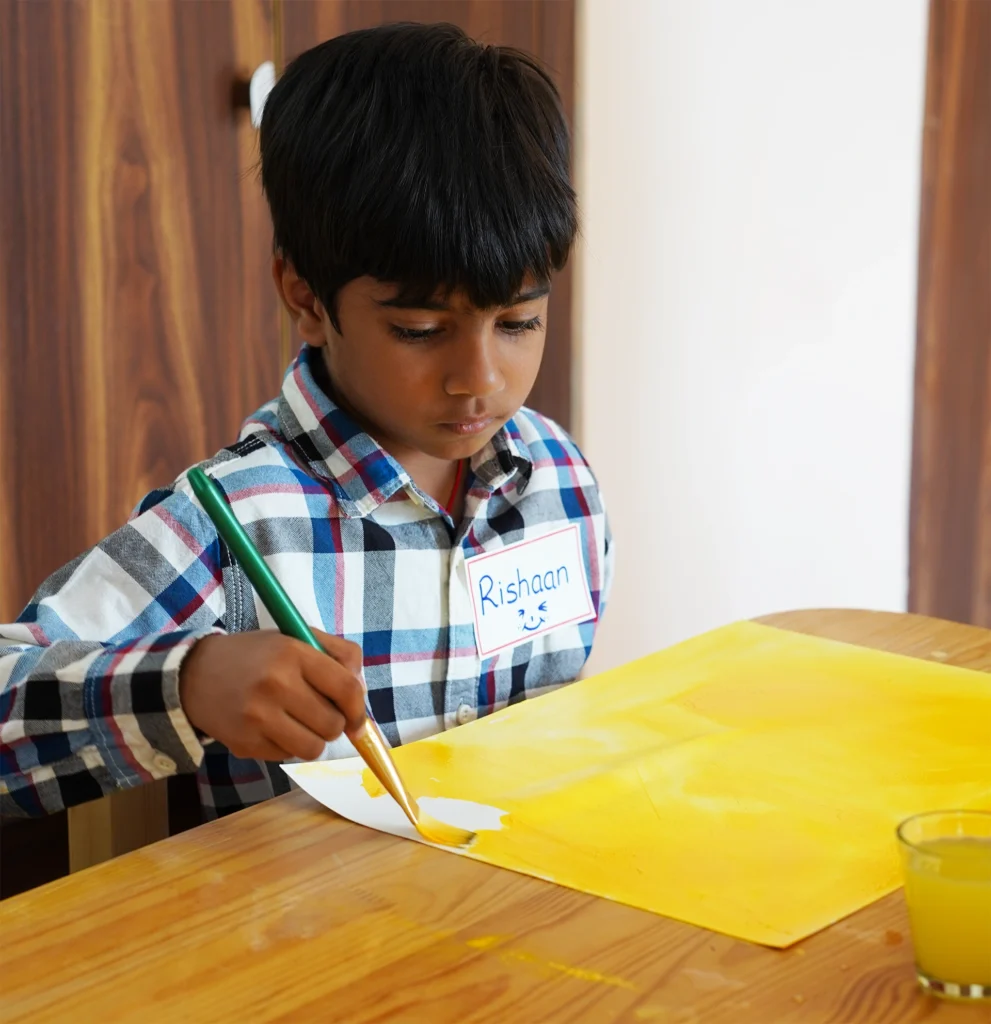
Writing develops alongside this process. Children experience letters through images, movement, and form drawing before working towards words and sentences. As their skills grow, they read stories, practise writing, and gradually work with longer pieces of text.
What children read and write changes as they move through the school:
Early Years
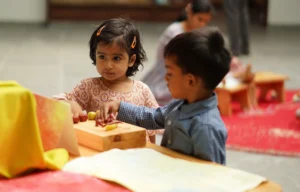
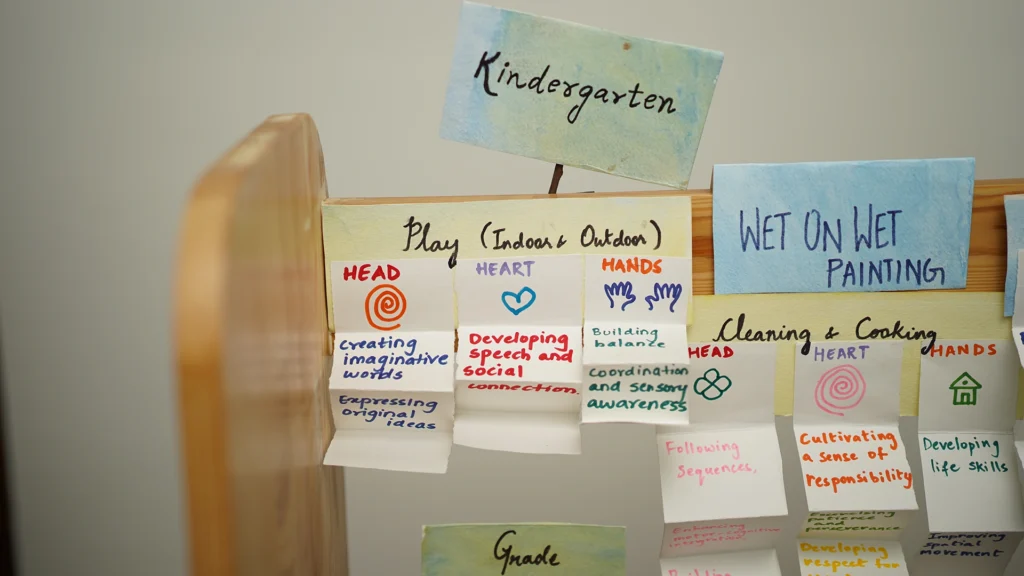
Children listen to stories, poems, verses, and songs and build their vocabulary through conversation and play. They draw, make marks, and begin to develop the hand control needed for writing. Formal reading and writing are not yet the focus.
Primary School
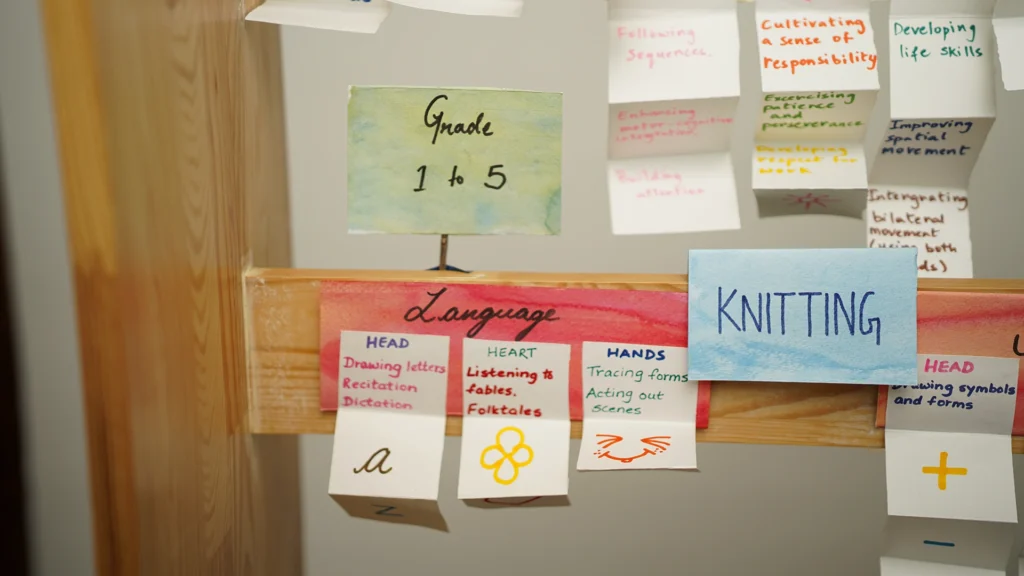
Formal literacy begins in the early primary grades. Children learn letters and sounds, begin reading words and sentences, and gradually move towards reading stories independently. Their writing develops from individual letters and words to sentences, stories, descriptions, and other pieces of their own work.
Middle School
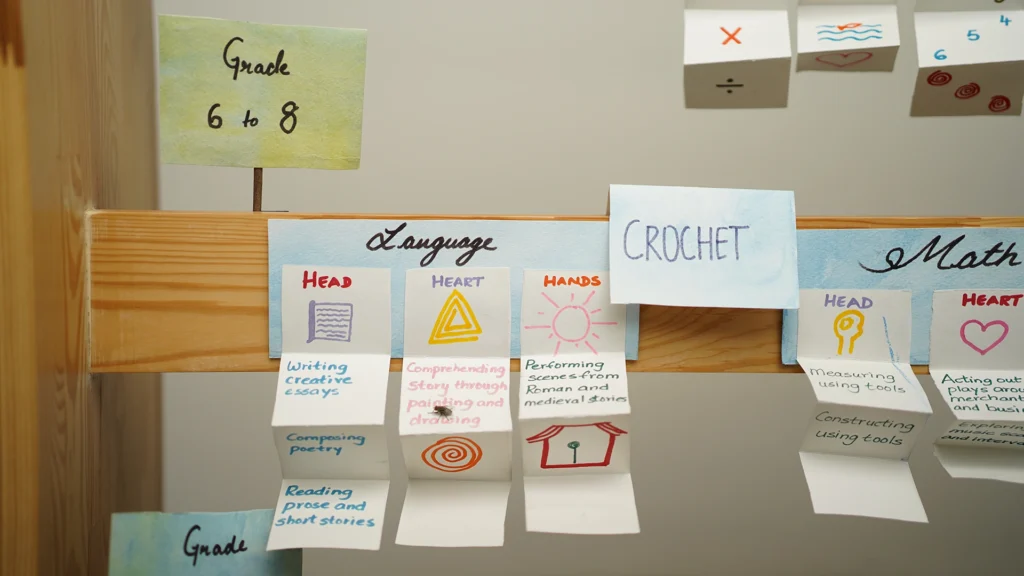
Reading becomes broader and more independent. Children work with longer stories, novels, poetry, history, science, and other subject-specific texts. Their writing becomes more detailed, with longer compositions, summaries, reports, descriptions, and written responses that require them to organise and explain their ideas.
High School
Students engage with increasingly complex texts across literature and academic subjects. They read critically, compare different ideas and perspectives, and develop a more personal response to what they read. Writing becomes more structured and analytical, including essays, research-based work, arguments, and independent projects.