
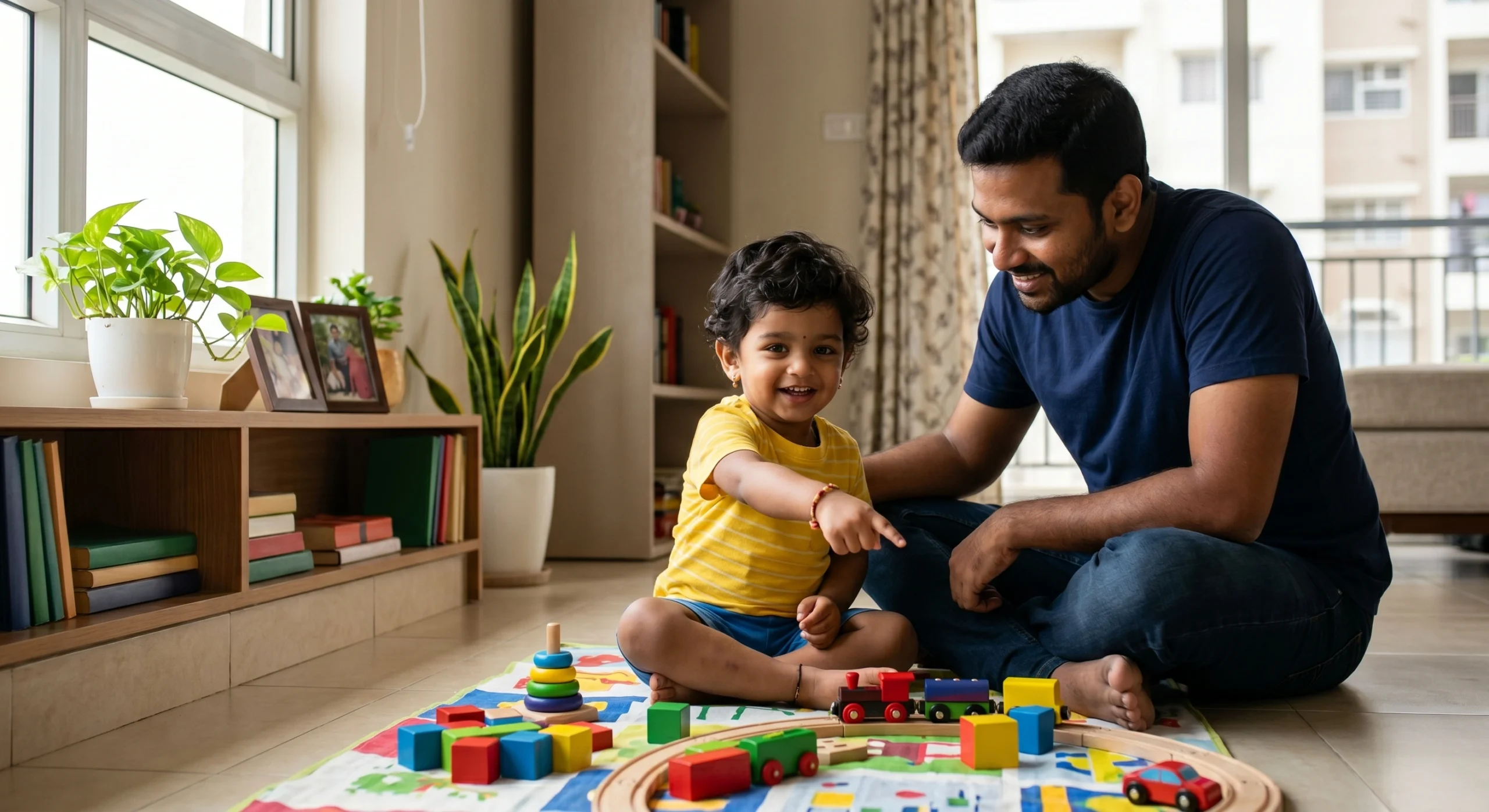
One of the concerns that often comes up during the toddler and preschool years for many parents is speech.
Some children seem to talk endlessly, while others use fewer words and prefer to communicate through gestures, expressions, or actions. It is natural to notice these differences in how children communicate as they grow. Yet when a child seems quieter than others of a similar age, it can raise concerns for parents.
“Is my child talking enough?” “Will the words come in their own time?” “Should I be doing something differently?” These are questions many parents find themselves asking with a fair amount of worry.
While it is important to pay attention to speech development, it is equally important to remember that children do not all follow the same timeline. Understanding what is typical, what deserves attention, and how children naturally develop language can help replace anxiety with informed observation.
Speech Development Does Not Follow the Same Timeline for Every Child
One of the most important things for parents to remember is that speech development is not a race. Children learn to walk, talk, play, and interact at different rates, and language development is no different. Some children begin speaking in sentences very early, while others spend a longer time listening, observing, and absorbing the language around them before they begin expressing themselves more confidently.
This is why looking only at the number of words a child speaks can sometimes give an incomplete picture. Communication is much broader than speech alone. A child who responds to their name, follows simple instructions, points to what they want, uses gestures, makes eye contact, enjoys songs and stories, or actively tries to communicate is already developing important language and social skills.
Rather than focusing on how a child compares to others, it is often more helpful to look at whether communication is gradually growing over time and whether the child is engaging with the people and world around them.
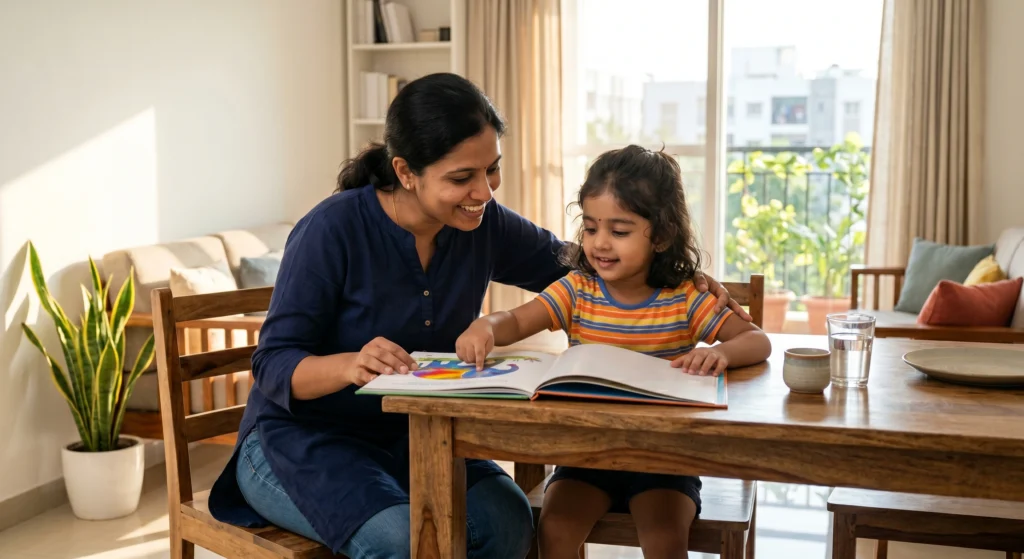
When to Relax and When to Check
In many cases, parents can feel reassured when communication is steadily expanding over time, even if it does not look exactly like other children’s development. New words, increased participation in conversations, greater understanding of instructions, and a growing interest in communicating are all positive signs that language is developing.
At the same time, there are situations where it may be helpful to seek further guidance. If communication seems very limited, if a child rarely responds when spoken to, if language development appears to have stopped progressing, or if parents have a persistent concern that does not go away, it is worth discussing these observations with a qualified professional.
Seeking support does not mean something is wrong with a child. Often, it simply provides clarity, reassurance, and, when needed, the opportunity for early support.
More from Thraya
How Preschool Supports Speech Development Naturally
Language develops best through meaningful human interaction, not through drills or pressure. A good preschool environment offers children many natural opportunities to listen, observe, participate, and communicate throughout the day.
Many parents are surprised to find that a child who speaks very little at home begins using more words after joining preschool. Being part of a warm and engaging social environment can encourage language to emerge in ways that are difficult to recreate through direct teaching alone.
Stories, songs, circle times, conversations, imaginative play, and daily routines all immerse children in rich language experiences. Children hear new vocabulary, learn the rhythm of language, and gradually gain confidence in expressing themselves. Just as importantly, they spend time with other children, which often creates a natural motivation to communicate, imitate, and participate.
Rather than focusing on making children speak, a nurturing preschool focuses on creating the conditions in which speech and communication can grow naturally.
What Parents Can Do at Home
While it is natural to look for activities that might help a child speak more, the most powerful support often comes through simple everyday interactions. Talking to children during daily routines, sharing stories, singing songs, and involving them in household activities all create meaningful opportunities for language to develop.
It can also help to slow down conversations and leave space for children to respond in their own time. When adults constantly anticipate a child’s needs or speak on their behalf, children have fewer opportunities to use language themselves.
The goal is not to focus on correcting every word a child says, but to give them many meaningful reasons to communicate throughout the day. Simple conversations during meals, while playing, reading stories, or working together at home often do more for language development than formal teaching activities.