
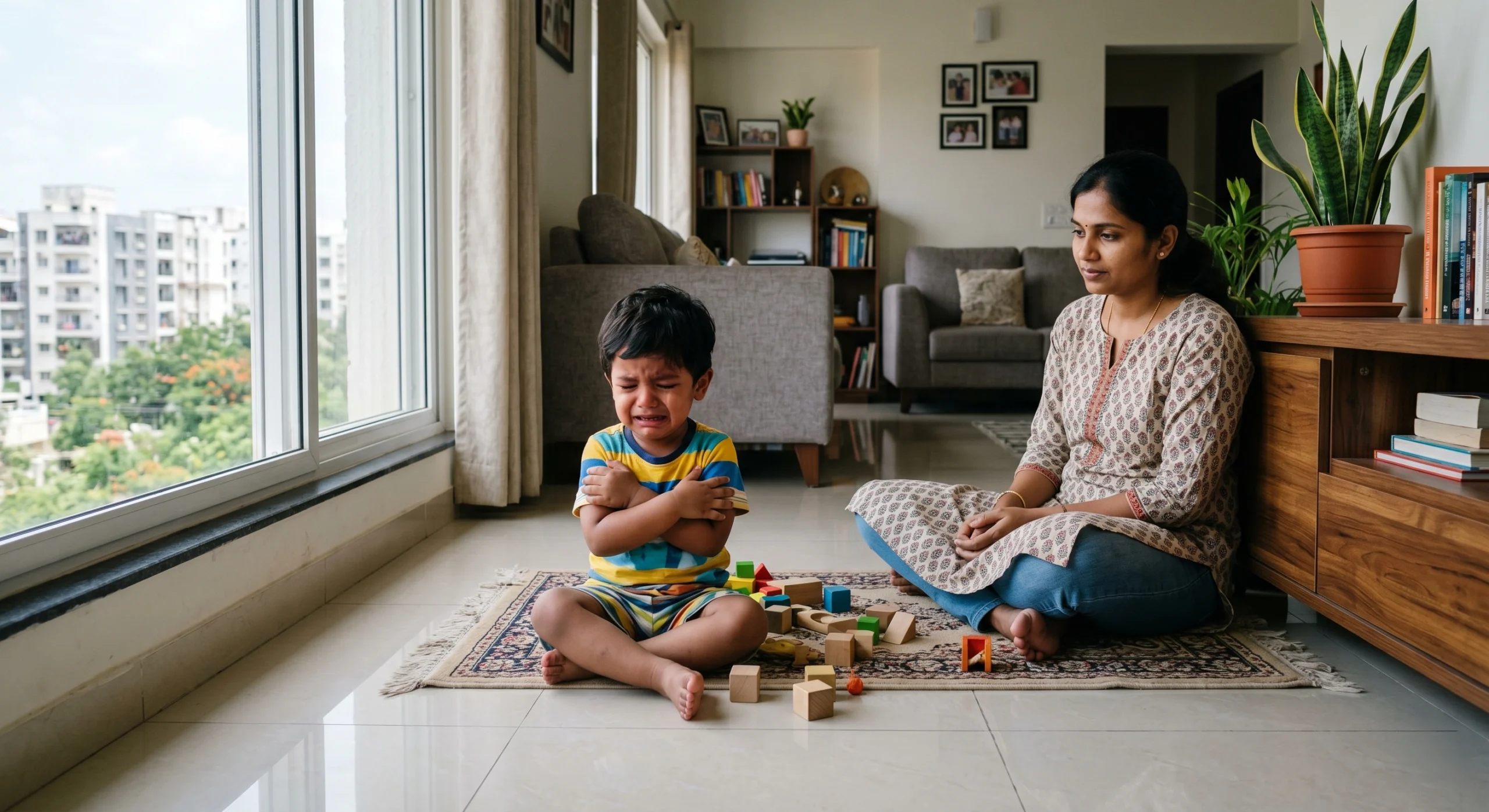
Many parents go through a phase of wondering, “Why is my child so angry all the time?” A simple request to get dressed can end in tears. Leaving the playground can trigger a meltdown. Turning off a screen, sitting down for a meal, or getting ready for bed can suddenly become a battle.
When these moments happen repeatedly, it is natural to start looking for better ways to manage behaviour. Parents may wonder whether they need to be firmer or use different discipline strategies. But with young children, tantrums are not always a sign of poor behaviour or inadequate discipline. Often, they are a sign that the child is feeling overwhelmed, and that their day may be lacking the sense of security and predictability that young children need.
This is where rhythm can play a powerful role. From a Waldorf perspective, a predictable daily rhythm helps children feel safe, settled, and emotionally supported, often reducing many of the struggles that show up as tantrums and resistance.
Tantrums Are Often a Sign of Overwhelm, Not Bad Behaviour
One of the reasons tantrums can be so challenging for adults is that they often appear disproportionate to the situation. A child may burst into tears because the wrong cup was given, refuse to leave the park, or become extremely upset over a seemingly small change in plans. Yet for young children, these reactions are rarely about the immediate trigger alone.
In the early years, children are still developing the ability to regulate their emotions. When feelings become too big, they can quickly spill out as crying, shouting, hitting, or resistance. What adults see as a tantrum is often a child struggling to cope with an experience that feels overwhelming in that moment.
It is also important to remember that children’s behaviour is influenced by much more than emotions alone. Tiredness, hunger, overstimulation, too many transitions, and uncertainty can all place additional strain on a young child’s nervous system. For this reason, it can be helpful to shift the question from “How do I stop the tantrum?” to “What might be making life feel overwhelming for this child right now?”
More from Thraya
Why Predictability Helps Calm the Nervous System
Young children thrive on predictability. When they know what comes next, they can relax into the flow of the day rather than constantly trying to understand what is happening around them. This sense of predictability creates a feeling of safety and security that is deeply important during the early years.
From a Waldorf perspective, this is one of the reasons rhythm is given so much importance. Rhythm is not about rigid schedules or strict routines. It is about creating a familiar pattern that repeats day after day. Meals happen in a predictable sequence, transitions follow a familiar flow, and daily activities gradually become known and expected.
For a young child, uncertainty can be surprisingly demanding. Not knowing when a parent will leave, when lunch will happen, what comes after playtime, or how the day will unfold requires constant adjustment. Over time, this can create stress and leave children more reactive to everyday challenges.
A consistent rhythm reduces this mental and emotional load. When the day’s events become familiar and predictable, children no longer need to spend energy anticipating what might happen next. Their nervous system can settle into a sense of trust and security. This is why children who live within a healthy rhythm often appear calmer, more settled, and less prone to emotional overwhelm.

How Rhythm Supports Emotional Regulation
Young children borrow their sense of regulation from the environment around them long before they can regulate themselves. Unlike adults, they cannot easily manage hunger, tiredness, frustration, excitement, or disappointment through conscious self-control. Their ability to remain emotionally balanced is closely connected to the rhythms that surround them.
When meals, rest, outdoor play, and sleep happen with a degree of regularity, the child’s physical and emotional needs are met more consistently. They are less likely to become overtired, overstimulated, or hungry—states that often make big emotions harder to manage.
Rhythm also provides an anchor during difficult moments. Even when a child is upset, the familiar flow of the day remains unchanged. Lunch still follows playtime. Bath time still comes before bed. This continuity helps children gradually experience that feelings may be intense, but they are temporary and held within a stable environment.
More from Thraya
A Sample Waldorf-Inspired Home Rhythm
A healthy family rhythm grows out of the realities of everyday life and therefore looks different in every home. The example below is simply a reference point, intended to offer inspiration and be adapted rather than followed exactly.
Morning rhythm
After school rhythm
Evening rhythm