
Many parents are drawn to Waldorf education in the early years because of its emphasis on play, creativity, nature, and holistic development. Yet as children grow older, a common question begins to surface: What about science? What about engineering? Will a Waldorf education prepare children for careers in medicine, technology, or research?
The concern is understandable. In most conventional schools, learning is closely tied to examinations, academic achievement, and competition. However, Waldorf education approaches this differently.
Rather than focusing primarily on early academic performance, it aims to develop the capacities like observation, curiosity, critical thinking, and independent learning which form the foundation of all scientific and technological pursuits.
How Waldorf Teaches Science Differently
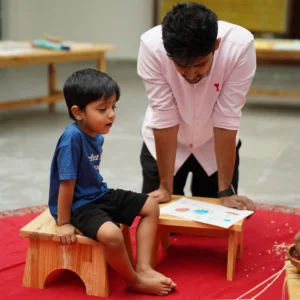
One of the distinctive aspects of Waldorf education is that science is taught through direct experience and observation rather than through memorisation alone. Children are encouraged to first encounter a phenomenon, observe it carefully, and describe what they notice before being introduced to explanations or conclusions.
For example, children may spend time observing how a plant grows, how shadows change throughout the day, or how different materials respond to heat. They are invited to look closely, ask questions, make connections, and reflect on their observations. In this way, science begins with wonder and curiosity rather than with facts to memorise.

This approach is often referred to as phenomenological science. Instead of starting with theories and asking children to accept them, it begins with real experiences and gradually leads children towards understanding. The goal is not simply to know scientific facts, but to develop the ability to observe carefully, think independently, and arrive at insights through experience.
These habits of observation and inquiry form the foundation of scientific thinking and remain valuable long after individual facts and formulas have been forgotten.
How Waldorf Prepares Children for Science and Technology Careers
When people think about science and technology careers, they often think about knowledge of formulas, facts, coding languages, or scientific concepts. While these are important, success in these fields depends on much more than information alone.
Scientists, engineers, doctors, and researchers must be able to observe carefully, think critically, solve problems, ask meaningful questions, and continue learning throughout their lives. These are capacities that cannot be developed through memorisation alone.
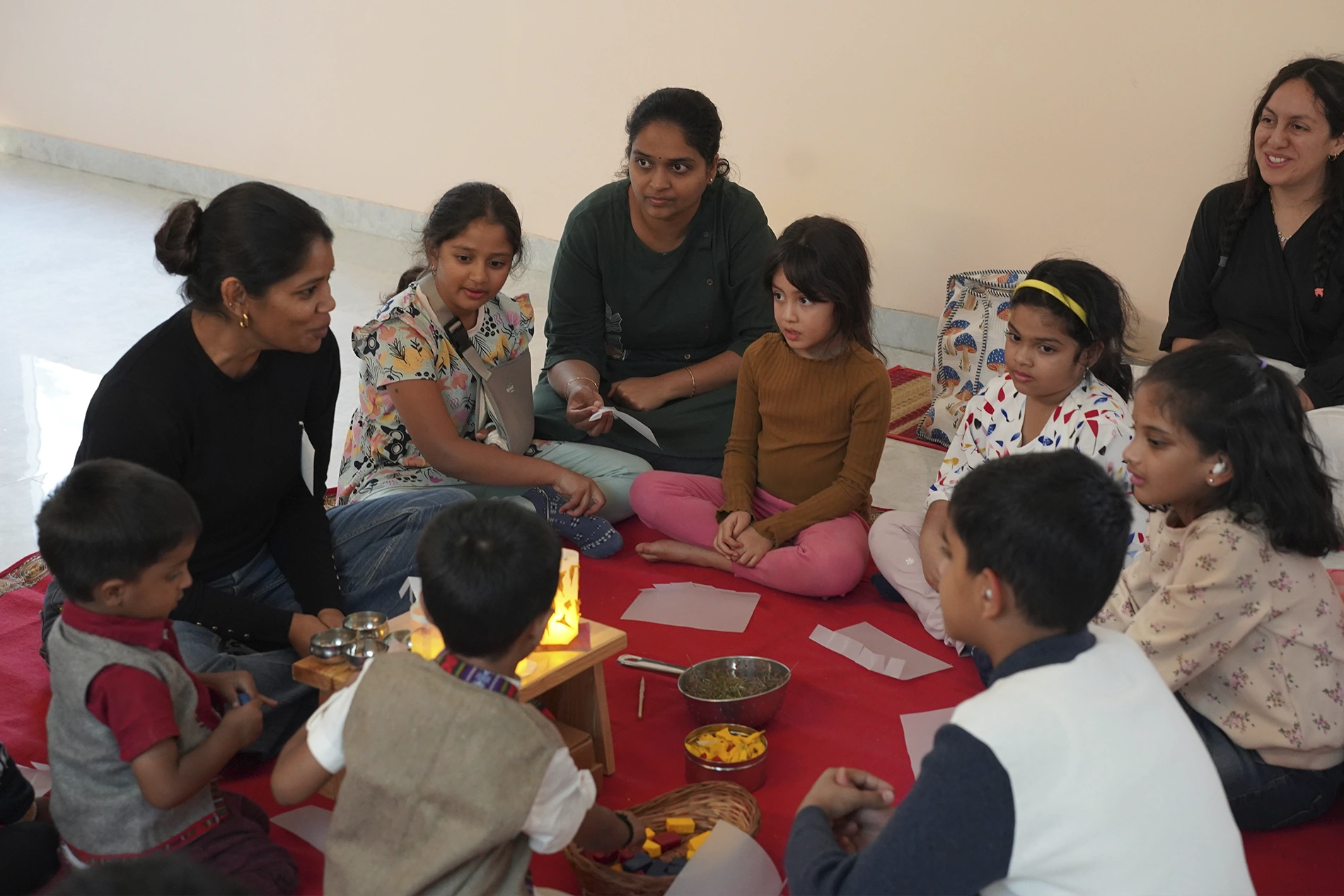
Waldorf education places strong emphasis on cultivating these habits from an early age. Through hands-on projects, practical work, experiments, artistic activities, and opportunities for independent thinking, children learn to approach challenges with curiosity, perseverance, and creativity. Whether they are building structures, observing patterns in nature, conducting science experiments, learning woodwork, knitting, gardening, or working through a long-term project, children are constantly developing the ability to observe, analyse, adapt, and solve problems.

Science, Mathematics, and Competitive Exams in the Higher Grades
For many Indian parents, the question also extends to whether a child educated through a Waldorf approach can perform well in competitive examinations such as JEE, NEET, and other entrance tests required for higher education.
What is often not widely understood is that Waldorf students do not remain in a play-based or experiential curriculum throughout their schooling. As they move into the higher grades, they engage with increasingly rigorous mathematics and science while continuing to strengthen their analytical and problem-solving abilities.
While competitive examinations certainly require focused preparation, they also demand conceptual understanding and the ability to apply knowledge meaningfully. Waldorf education seeks to build these capacities over many years, providing students with a strong foundation from which they can pursue specialised academic and professional pathways.
Can Waldorf Students Pursue Careers in Engineering, Medicine, or Technology?
Waldorf graduates around the world can be found in a wide range of professions, including medicine, engineering, research, software development, architecture, education, and entrepreneurship. Their career choices are often as diverse as their interests.
This diversity reflects an important aspect of Waldorf education. Rather than preparing children for a specific career path from an early age, it aims to develop well-rounded individuals who can later pursue their interests with confidence and competence. Whether a student is drawn towards science and technology, the humanities, the arts, or business, the intention is to keep those possibilities open rather than narrow them too early.
Ultimately, a Waldorf education does not close the door to careers in engineering, medicine, technology, or the sciences. While the path may look different in the early years, students continue to develop the knowledge, skills, and academic foundations needed to pursue higher education and specialised professional fields. The difference lies not in whether they learn science, but in how they are introduced to it and how their understanding develops over time.