
Toilet training often becomes a major focus for parents as preschool approaches. Questions like “What if my child is not fully trained yet?” or “Will the school expect complete independence?” can make the process feel stressful and time-sensitive for many families.
But toilet training is not something children master overnight. It is important to remember that toilet training is a gradual process. Accidents, setbacks, and inconsistent days are a normal part of learning, especially in the early stages.
Like most early childhood milestones, it develops gradually and looks different for every child. While many children begin showing readiness signs between ages 2 and 4, successful toilet training depends more on developmental readiness, consistency, and emotional comfort than a fixed age or deadline.
Signs A Child May Be Ready For Toilet Training
Children show readiness for toilet training through a mix of physical control, communication, and growing independence. While some children may show these signs earlier, others may need more time to feel both physically and emotionally ready.
One of the earliest signs of readiness is when a child stays dry for longer periods, which shows developing bladder control during the day. Along with this, children may start showing awareness of their body needs by telling parents after peeing or pooping, showing discomfort with a wet or soiled diaper, or becoming curious when others use the toilet.
Readiness can also be seen in everyday behavior. The child may begin to follow simple instructions, stay engaged in one activity for a short time, and show a growing desire for independence by wanting to “do it myself.” Together, these signs usually indicate that the child may be ready to slowly begin toilet training.
A Simple Toilet Training Timeline
Toilet training works best when it is introduced step by step, rather than all at once. A gentle and consistent approach helps children feel safe and reduces pressure during the learning process.
Start With Familiarity
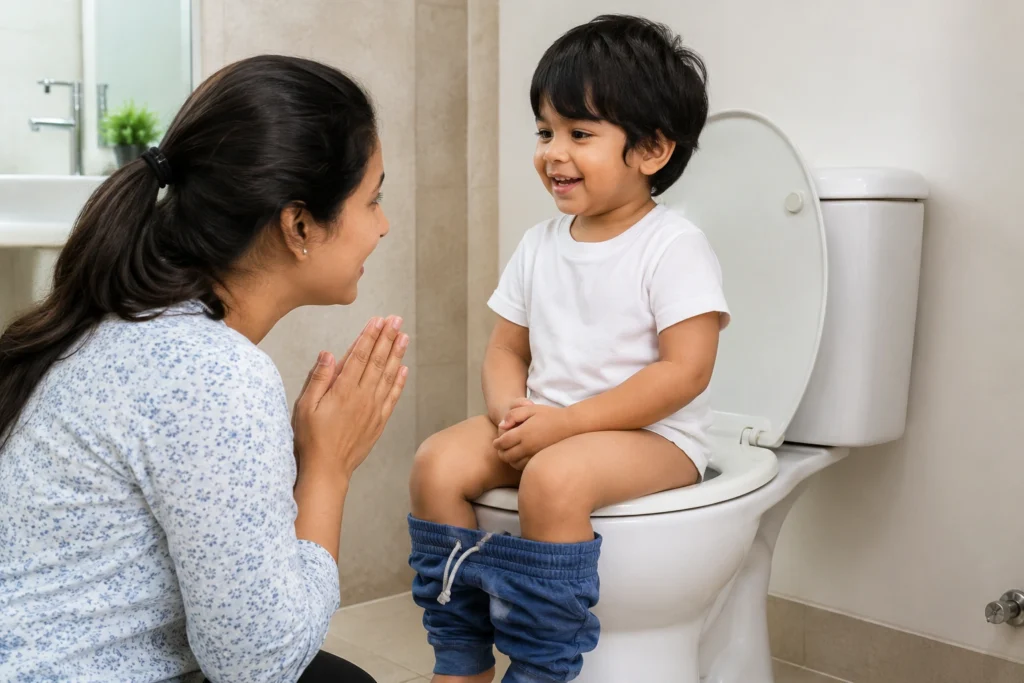
Begin by introducing the potty or toilet in a casual way. Let the child sit on it with clothes on, talk about it in simple terms, and make it a normal part of daily routine without expecting results immediately. The goal at this stage is comfort, not control.
Build Small Daily Routines
Once the child is familiar, slowly add simple routines like sitting on the potty at regular times, such as after meals or before bath time. Encourage efforts with positive words, even if nothing happens. This helps the child understand the routine without pressure.
Prepare For Preschool
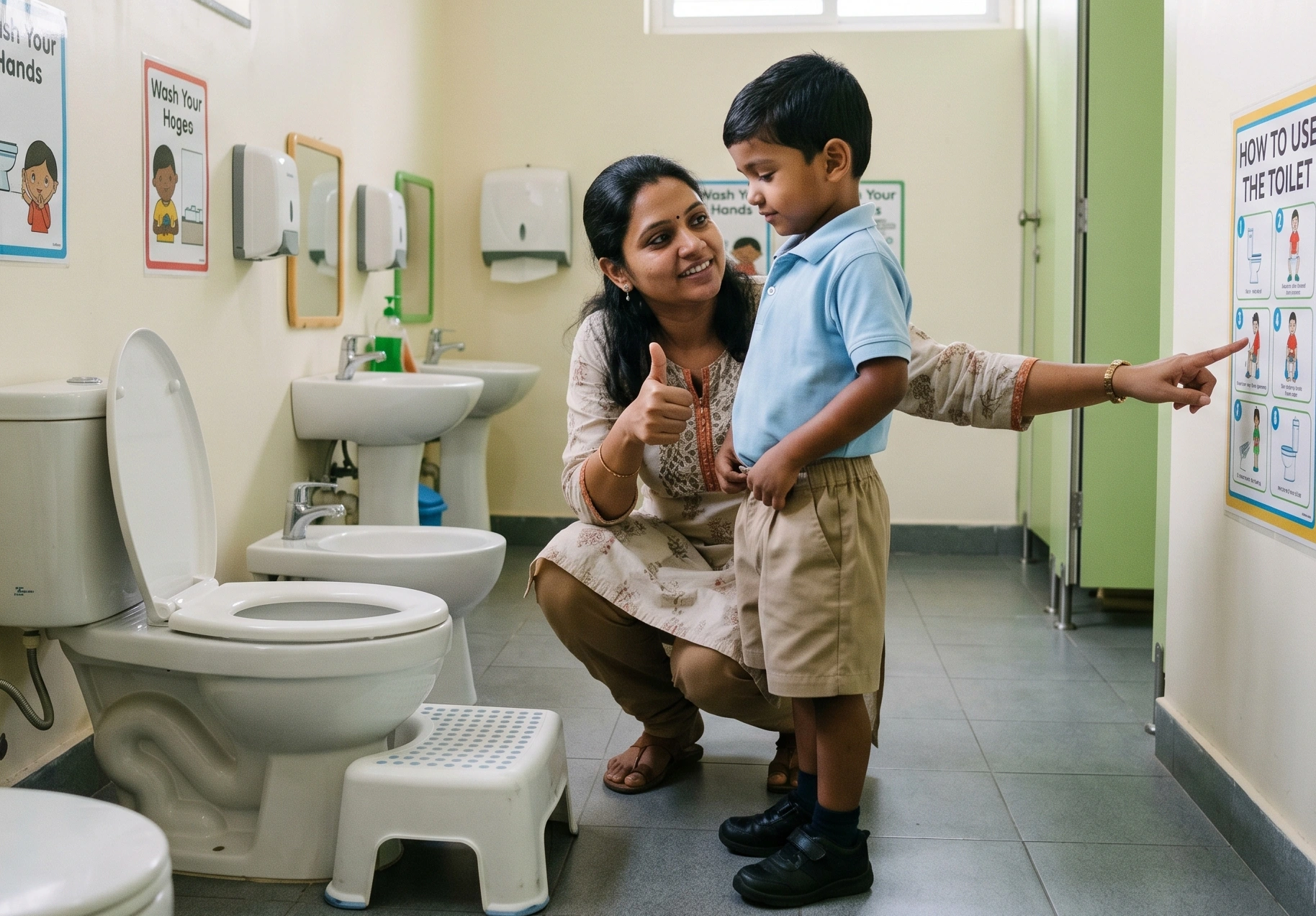
As preschool approaches, focus on practical independence. Practice using toilets outside the home, teach simple steps like pulling pants up and down, and encourage handwashing. It also helps to maintain communication with the teachers so that there is consistency in the process and approach between home and school to support the child.
What Often Makes Toilet Training Harder
Even with a simple routine and steady progress, toilet training does not always move in a straight line. As children begin practicing more independence, some days may feel smooth while others may bring resistance or accidents. This is completely normal during the learning phase.
However, certain approaches can make the process more difficult for the child. One common challenge is starting too early, before the child is truly ready. When this happens, children may feel pressured and lose confidence, which can slow down progress.
Pressure from adults can also make things harder. Comparing children with others, reacting strongly to accidents, or using punishment can create anxiety around using the toilet. Instead of feeling safe to learn, children may begin to resist the process.
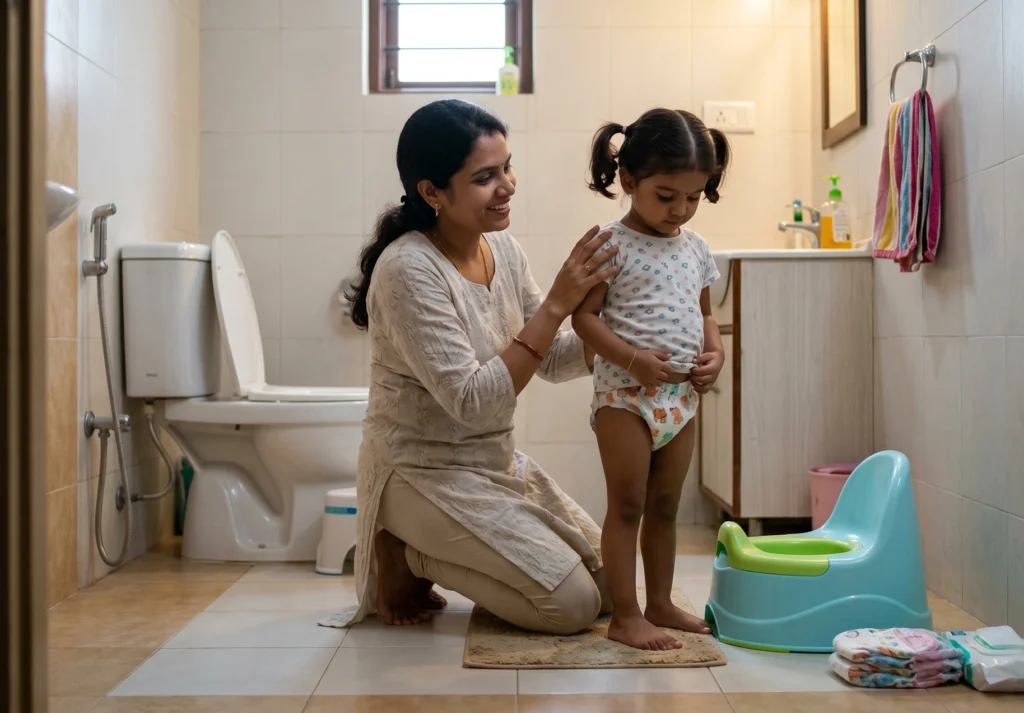
Another factor is inconsistency, especially when children move between diapers and underwear without a clear routine. If diapers are used sometimes and underwear at other times without structure, children may feel confused about expectations and delay learning. A more steady approach, where the child clearly understands what is expected, usually supports better progress both at home and preschool.
When Parents May Need Extra Support
Most children learn toilet training gradually with time and consistency. But sometimes, it helps to look for external support when progress is not moving forward or when the child seems distressed.
Parents may consider speaking to a paediatrician or seeking guidance if the child shows strong fear or refusal to use the toilet for several weeks, even after gentle and consistent attempts at home. It is also important to seek help if the child frequently holds urine or stool for long periods, as this can cause discomfort or constipation.
Support is also useful when accidents continue very often beyond the preschool transition period, or when the child shows regression after previously making progress. In such cases, a paediatrician or preschool teacher can help check if there is a routine issue, emotional stress, or a need for a different approach.