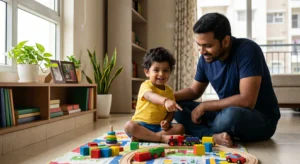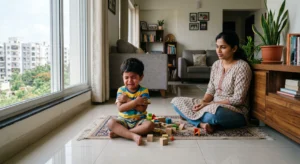

There are often moments in the day when parents wonder, “What can my child do at home besides watching a screen?” The answer does not always need to be another activity planned or another toy brought home.
Children do not need expensive toys or a constant stream of activities to keep them engaged. At 3–5 years, they are naturally curious about the world around them. A bowl of water, some yarn, a basket of vegetables, or a few wooden blocks can offer plenty to explore when there is time and space to do so.
At Thraya, we believe screen-free time is not about keeping children occupied. It is about giving them opportunities to move, make, participate, imagine, and discover through real experiences.
Let Their Hands Be Busy
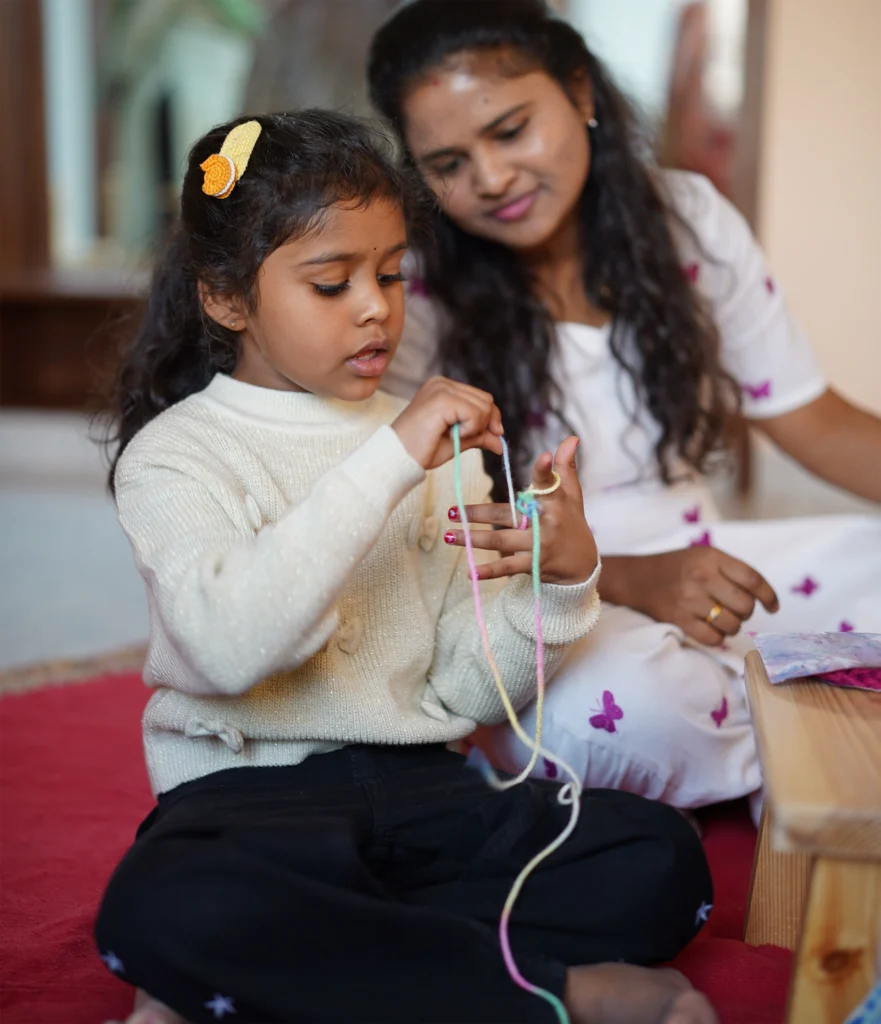
At 3–5 years, children are discovering how much their hands can do. Threading beads, finger weaving, lacing, using cloth pegs, opening containers, or transferring objects with kitchen tongs give the hands opportunities to practise coordination and control.
These simple activities strengthen little fingers while building patience and concentration, laying the foundations for later tasks such as writing. Unlike a screen that directs the next step, these activities allow children to work things out through their own movements.
Let Them Be Part of Everyday Work
Children are naturally interested in the work happening around them. Matching socks, wiping a table, washing a small cloth, watering plants, or hanging something out to dry gives them a chance to imitate what they see and contribute to everyday life.
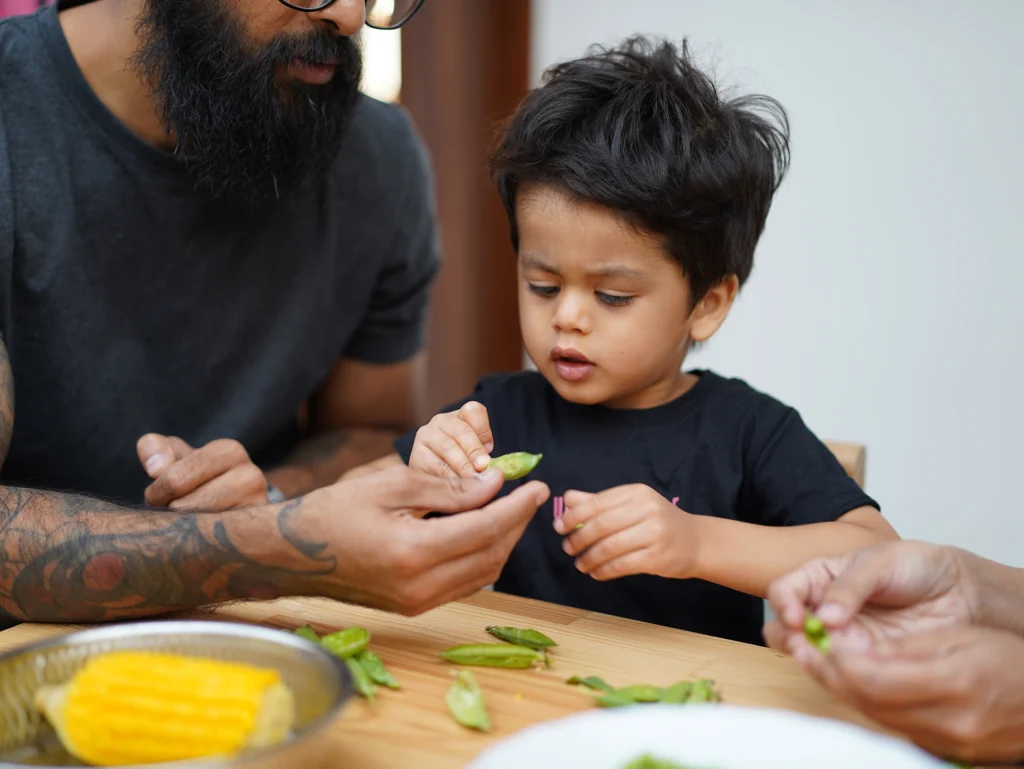
The same can happen in the kitchen — peeling garlic, separating coriander leaves, kneading dough, or arranging fruit for the table. Real work gives children something meaningful to do, rather than something simply designed to keep them busy.
Let the Senses Lead
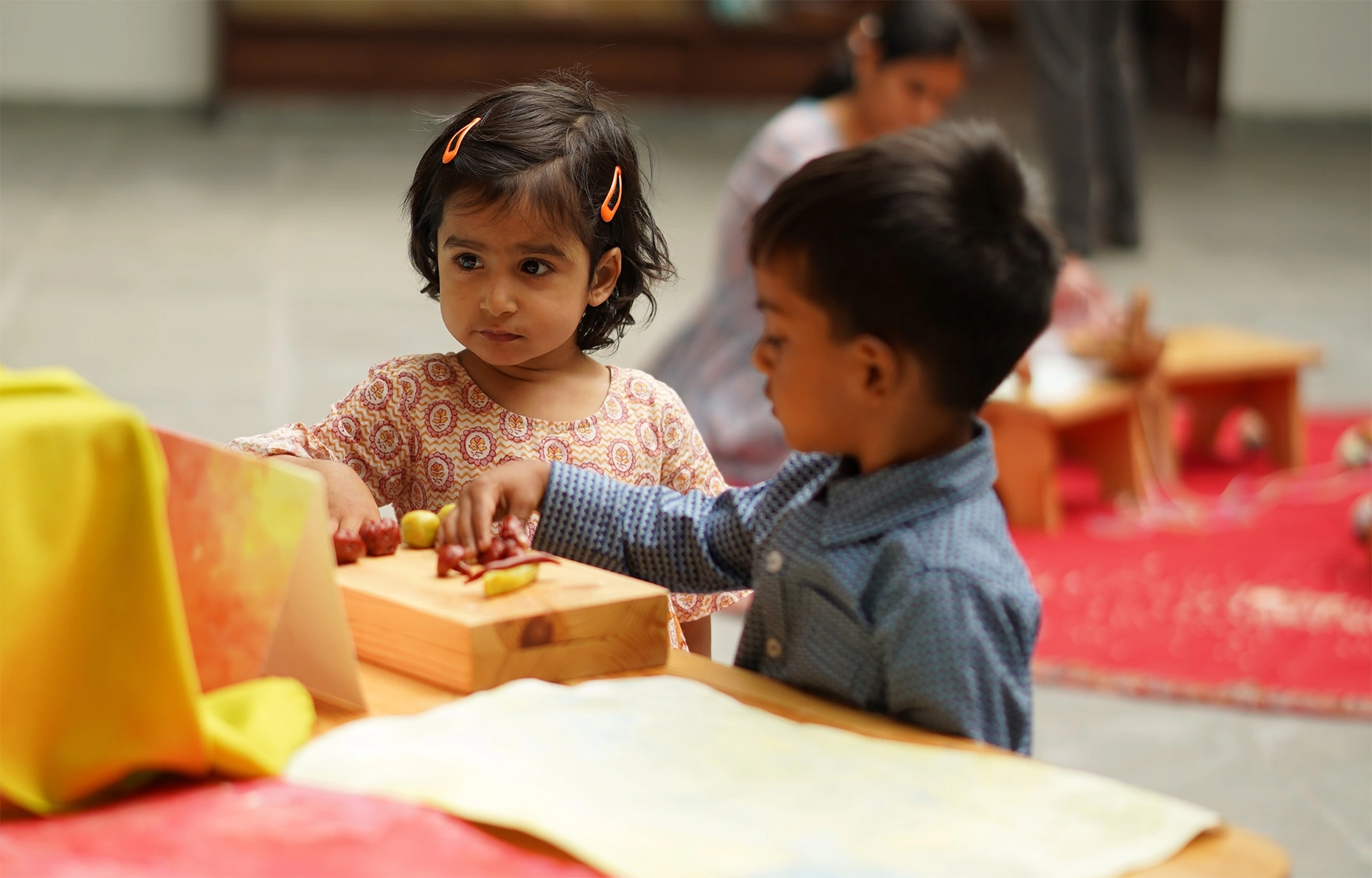
Much of early childhood learning happens through direct sensory experience. Water, clay, dough, herbs, vegetables, and natural materials invite children to touch, smell, observe, and discover.
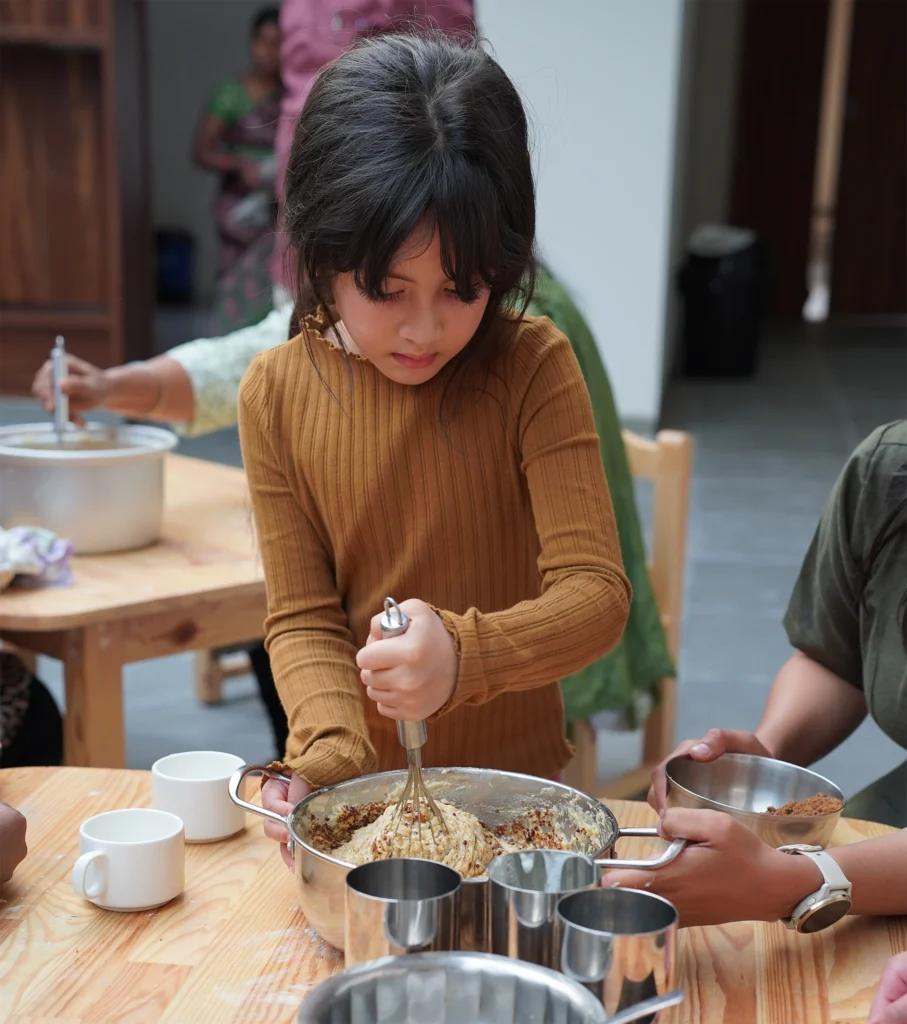
Water play might begin with pouring and squeezing, then lead to noticing what floats and sinks. Kneading dough or shaping clay allows children to feel how a material changes in their hands. Vegetable printing introduces colour, shape, and texture.
These experiences engage the whole child in a way that a screen cannot — through touch, movement, observation, and discovery.
Leave Room for Imagination
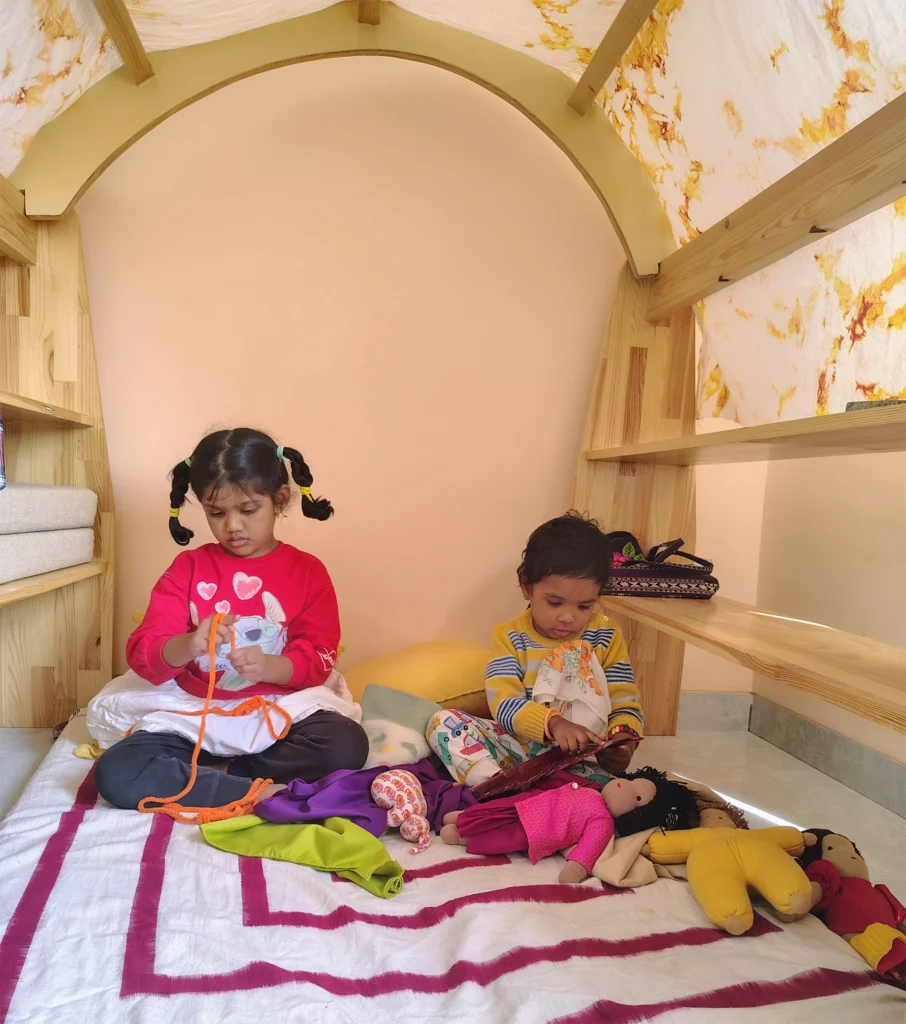
Open-ended materials offer something different from toys with one fixed purpose. Wooden blocks, pieces of fabric, clay, or natural objects can become whatever the child imagines in that moment.
A block may become a house one day and a bridge the next. A piece of cloth may become a blanket, a river, or a little shelter. As children decide what something can become, they also learn to build, balance, change, and try again.
With fewer instructions built into the material, there is more room for creativity, problem-solving, and persistence to grow through play.
The Gift of Unhurried Time
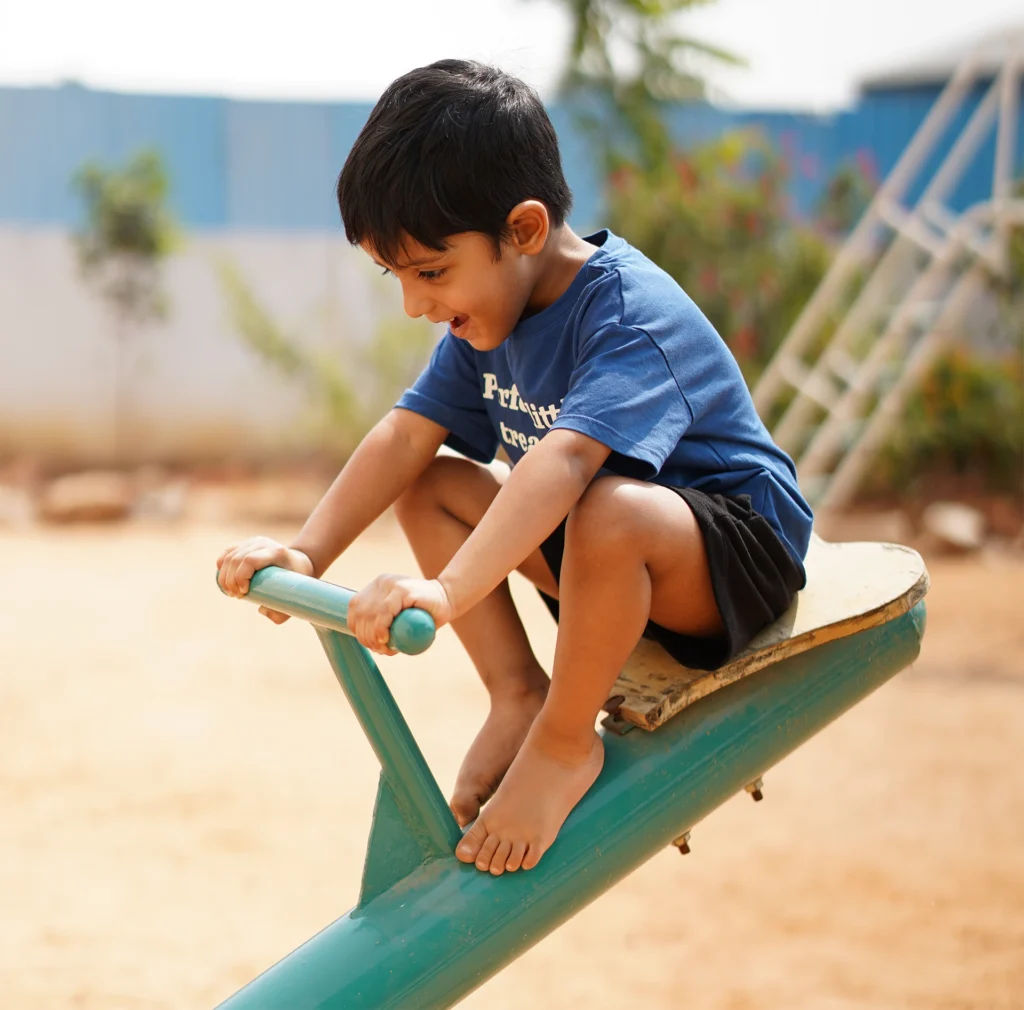
Children do not need every moment of the day planned or filled with something to do. A little space between activities allows them to pause, observe what is around them, and decide what interests them.
A child may begin by pouring water and move on to washing a toy, or start building with blocks and gradually create an entire little world. The activity may change many times, without needing an adult to direct where it should go. When a child is given time to work something out, repeat an activity, or sit with a moment of boredom, there is room for their own ideas to emerge.
Sometimes, the most valuable part of screen-free time is simply having the time to wonder, try, repeat, and discover.